

Will Technological Change Make the Degree Irrelevant? It’s Up to Colleges to Decide.
by Melissa Carleton
In my last article, I discussed how companies and policymakers can step in to help in an AI-driven labor market. But, what about educational institutions? While students themselves can develop skills to prepare, educational institutions can play a role in guiding them on which skills to develop.
A college education implicitly promises increased access to career opportunities and higher earnings. But students often don’t know what they don’t know when it comes to preparing for careers. Upon entering college, they usually can’t name the particular skills they’ll need to succeed as, say, a data scientist. Instead, they place their trust in key college courses to provide relevant material.
Is this trust eroding? Given the current state of the labor market, students and families themselves are increasingly wondering why they should attend college. If college is meant to prepare students for a future career, don’t the current labor market trends that Kent and I highlighted tell a different story?
The cost of college is not trivial, and families are increasingly struggling to justify it as more and more tasks become automated.
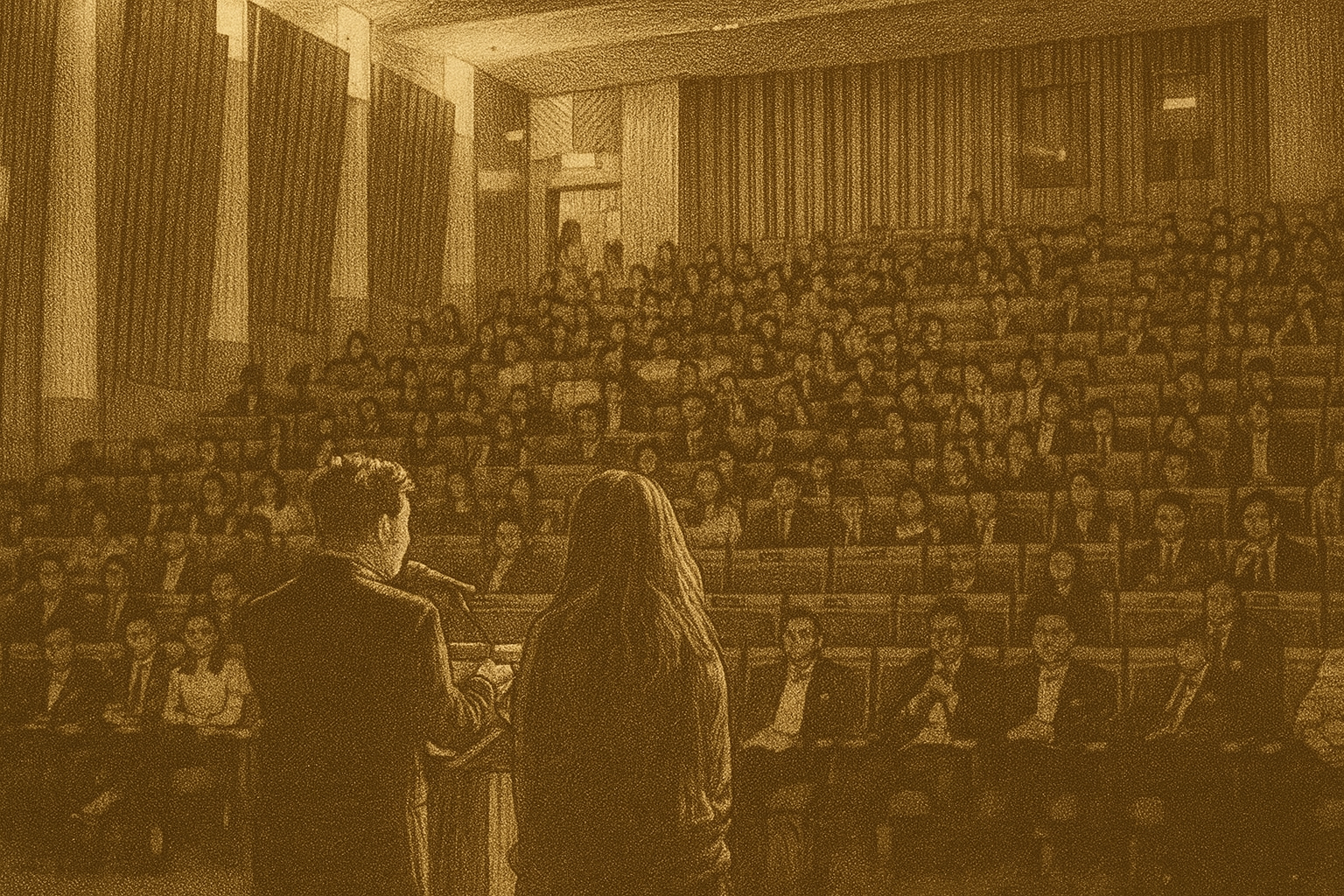
Several trending topics touch on how AI is reshaping the university system. For example, stories of students using AI to cheat on exams run rampant, and educators are seeking ways to prevent these incidents. Educators themselves wonder if it’s ethical to use AI to generate assignments and test questions. While these topics merit discussion, this article examines how the university system can help students prepare for an AI-driven labor force.
College Enrollment Trends, Statistics, and Perceptions
Before bringing AI into the picture, a couple of trends stand out regarding college enrollment, in general. In a striking study, Case and Deaton (2023) note the dramatic rise in the gap in life expectancy between people with a college degree and those without. This gap increased from 2.6 years in 1992 to 8.5 years in 2021 in the U.S. Based on their study alone, a college education appears to be a good deal.
Meanwhile, young adults are becoming increasingly disenchanted with higher education. A Brookings report from 2023 noted that just 41% of young adults believed that higher education is very important, at the time surveyed, down from 74% a decade prior. Given increasing fears surrounding automation, we can only imagine that the number is even lower in 2025.
Needless to say, students themselves are not a monolith. Among the population of students eligible for traditional four-year college degrees, some, regardless of AI development, are more interested in other paths, such as trade or vocational schools. Others are likely to enroll regardless of AI development, but their experience once they’re there will shape their opinion on higher education for years to come. These potential donors, depending on their satisfaction towards their education, could continue to fund the system that served them, or not.
In addition, a college education remains unaffordable for many. In striving to democratize college education, colleges should not only ensure affordability at the time of first-year orientation. They should also ensure that life after enhances students’ economic standing, rather than leaving them buried in debt while struggling to find a job.
Defining the Question
Casual statements such as “College doesn’t prepare students well enough for today’s society” or “a college degree is no longer useful when entry-level tasks are becoming automated” imply that colleges, if they are useful, should prepare students for today’s labor market, along with the dissatisfaction that they’re not. To create actionable steps for educational institutions, it helps to pinpoint how they can modernize several key aspects of a college education.
Refreshing College Coursework
One way that college courses prepare students for the labor force is through coursework. Coursework can serve other purposes, including helping students become better decision makers and better people. But students and their parents typically view the relevance of the curriculum as a major driver of their perceived return on their investment.
The desired outcome can vary across courses. Not all courses should necessarily emphasize career preparation. Those teaching core skills such as writing, coding, or statistics are more typically evaluated through the lens of career preparation. Students may question the importance of learning how to structure an essay when AI can spit one out in seconds. They may wonder about the use of data cleaning when AI can easily write a simple script to accomplish the same purpose.
An experienced professional who uses AI might wisely point out that foundational skills taught in classrooms still matter when interpreting AI’s output in human contexts. However, ask a typical student, and they might tell you, “I’ve applied to a few hundred roles that require someone who can clean data. Competition is so intense because AI can clean data on its own.” Both the professional and the student are correct. It becomes up to colleges to help students situate their coursework in the current context.
Professors of core courses can help by tying their content to relevant career-related tasks. The professor of that essay writing course could provide students with real-life case studies of companies that encountered legal troubles when relying on AI-generated output that falsified claims. Just a few lessons to help students integrate classroom material into their careers could make a huge difference. This simple action could assure students that their mentors care about their well-being in a labor market that seems to be growing more tumultuous by the month.
Colleges and universities can also form working groups to bring job-ready skills into the curriculum. They could start by analyzing relevant entry-level job descriptions for new keywords, such as AI tokens, APIs, or natural language processing, and ensure their curriculum reflects these requirements. They could also solicit feedback from recent alumni. Whether or not these market-ready skills directly relate to AI, such measures could help educators transform the concept of a future-proof degree from an ambiguous demand into a plan for action.
Preparing Students for the Labor Market
Creating a future-ready curriculum is a start, but students also face the hurdle of learning how to navigate the job application process. The resume of the most prepared student who can query APIs seamlessly could get lost if they don’t make the right contacts.
Accordingly, a well-intended professor who tells sophomores that they “don’t have to worry about preparing for jobs until senior year” may be miscalibrating their advice to an easier past. In past years, a standout student could apply to a few dozen jobs without contacting any firms and reliably hear back from one. Today’s college students must communicate with recruiters, reach out to contacts for referrals, and align increasingly complex competing timelines, all while balancing a full courseload.
Learning these skills takes time, but it does not have to come at the expense of exploring one’s interests in college. Just a few hours a month devoted to career prep can help students overcome some of the hurdles to applying for jobs, come senior year. Educators should inform students that job application processes, particularly at large companies, can feature multiple rounds. They may wish to plan their coursework earlier than in years past to avoid having multiple midterms on top of interviews.
Furthermore, mandatory career seminars on topics such as following up with recruiters can help students whom the job application process may otherwise overlook. Such seminars could ensure that important job-hunting information is not buried in a hidden curriculum reserved for the most privileged or well-connected. These seminars can also help nudge students to plan for different fallback options, so that if one door closes, they can find one that’s open.
College: The Education Itself or the Network?
Another way colleges generate value for students is through their networks of students, alumni, and firm contacts. Regardless of the curriculum’s status, college serves as a hub to forge connections that can help students learn the “hidden curriculum” of their desired career path. These connections can accelerate the student’s job application, bringing their resume from the bottom of the pile to the top. A student who cold-messages someone for career advice is more likely to get a response if that person attended their school.
Ironically, an AI-driven labor force has somehow led the labor market to be more dependent on human connection, rather than less. When candidates can use AI tools to seamlessly draft resumes, cover letters, and other application materials in a fraction of the original time, employers become overwhelmed by applications. By reaching out to a friend or an alum, students can move forward with an application that would otherwise get lost in a void.
Some students have advantages over others. Many schools, particularly elite schools, contain powerful networks that help students tap into otherwise inaccessible career opportunities. A Mother Jones article shares the journey of a brilliant, previously low-income, student Justin Portela, who became a consultant at McKinsey. It started with an unexpected email encouraging him to apply for McKinsey’s summer internship, but alumni networks propelled him to the next phase. Referencing a diversity-related program designed to broaden the interview pipeline that he attended, he noted that students who “didn’t know how to code switch” were those who ultimately would not receive an internship offer, largely defeating the purpose of the program.
Recent studies back up Portela’s story. Chetty et al. (2025) find that attending an ivy-plus college, rather than a flagship college, increases students’ chances of reaching the top 1% of the earnings distribution by 50%. Clayton et al. (2025) find that transitions to first jobs after college explain the earnings gap between low-income and other students by almost two-thirds, even after accounting for GPA and other relevant factors.
There are several ways that colleges themselves can help students overcome these challenges. They can accelerate existing efforts to reach out to employers or create new initiatives. Centralized alumni networks can help. The Wellesley Hive is one such example, where students can connect with alumni to share career or personal interests. The platform regularly serves as a connection point between current students and alumni.
Career Services offices can also intentionally collaborate with firms with a positive history of recruiting and onboarding students. A database of statistics gained from surveying alumni can help them track which firms have a positive relationship with that university. Emails containing this information, addressed to the entire student body, can connect students with opportunities once hidden behind closed doors. These suggestions serve as starting points, but it’s up to each educational institution to actively ensure that all students can reap the benefits of college as a networking hub.
The System’s Response Today Will Shape the Future
Ask any recent college graduate, and you will hear that the job market today is tough. Some students will be fortunate to land a job right away by reaching out to their networks and learning how to plan early. Others may fall through the cracks if educational institutions do not step up and provide them with proper resources and guidance.
A college education, in its ideal, provides students with opportunities instead of leaving them more financially insecure. While colleges and universities cannot control the pace of technological change, they must implement efforts to ensure that fewer students get left behind.
Sources:
Case, Anne, and Angus Deaton. “Accounting for the Widening Mortality Gap Between American Adults With and Without a BA.” Brookings Papers on Economic Activity (BPEA), Fall 2023. September 27, 2023. https://www.brookings.edu/articles/accounting-for-the-widening-mortality-gap-between-american-adults-with-and-without-a-ba/
Chetty, Raj, David J. Deming, and John N. Friedman. “Diversifying Society’s Leaders? The Determinants and Causal Effects of Admission to Highly Selective Private Colleges.” Working Paper, Opportunity Insights, July 2023 (Revised August 2025). https://opportunityinsights.org/wp-content/uploads/2023/07/CollegeAdmissions_Paper.pdf
Gentle, Stuart. “Six Months: The Average Time It Takes for a Graduate to Find a Job in the Current Climate” OnRec. (n.d.). https://www.onrec.com/news/statistics/six-months-the-average-time-it-takes-for-a-graduate-to-find-a-job-in-the-current
Goodman, Gabriela. “Experts Discuss Whether College Is Still Worth It.” Brookings Institution, December 13, 2023. https://www.brookings.edu/articles/experts-discuss-whether-college-is-still-worth-it/
Mandery, Evan. “Elite Ivy-League Colleges Endowment Inequality Career Funnel: Finance/Management/Consulting/Tech Recruiting.” Mother Jones, September 2025. https://www.motherjones.com/politics/2025/09/elite-ivy-league-colleges-endowment-inequality-career-funnel-finance-management-consulting-tech-recruiting/
Siu, Ernestine. “The Rise of Artificial Intelligence Can Make College Degrees ‘Out of Date’: Upskill in AI or Fall Behind, Says Expert.” CNBC, June 11, 2025. https://www.cnbc.com/2025/06/11/report-the-rise-of-ai-can-make-college-degrees-out-of-date.html
Scott-Clayton, Judith; Minaya, Veronica; Libassi, C.J.; Thomas, Joshua K.R. “Who Rides Out the Storm? The Immediate Post-College Transition and Its Role in Socioeconomic Earnings Gaps.” NBER Working Paper No. 34366, October 2025. doi:10.3386/w34366. https://www.nber.org/papers/w34366 nber.org
Texas A&M University Division of Marketing and Communications. “A College Education Will Be ‘More Important Than Ever’ in Age of AI.” Texas A&M Stories, September 26, 2024.https://stories.tamu.edu/news/2024/09/26/a-college-education-will-be-more-important-than-ever-in-age-of-ai/