

Column

Who's Really Deciding Whether You Buy a House?
The article argues that historic low consumer sentiment and elevated mortgage rates have left prospective homebuyers without a clear macro signal, making the social context of the decision more important. Borrowing from B2B marketing, it frames homebuying as a “buying group” decision shaped by partners, parents, friends, recent buyers and cultural scripts about ownership. In a volatile economy, those voices grow louder and often reflect conditions that no longer match today’s housing market.
It urges buyers to evaluate each influence rather than suppress it: whether the advice fits their finances, local market and current rate environment, or merely repeats old assumptions about adulthood and stability. With the Fed likely holding rates and uncertainty continuing, the article concludes that clear decisions depend on hearing one’s own signal through the surrounding noise.
The War Tax You're Already Paying
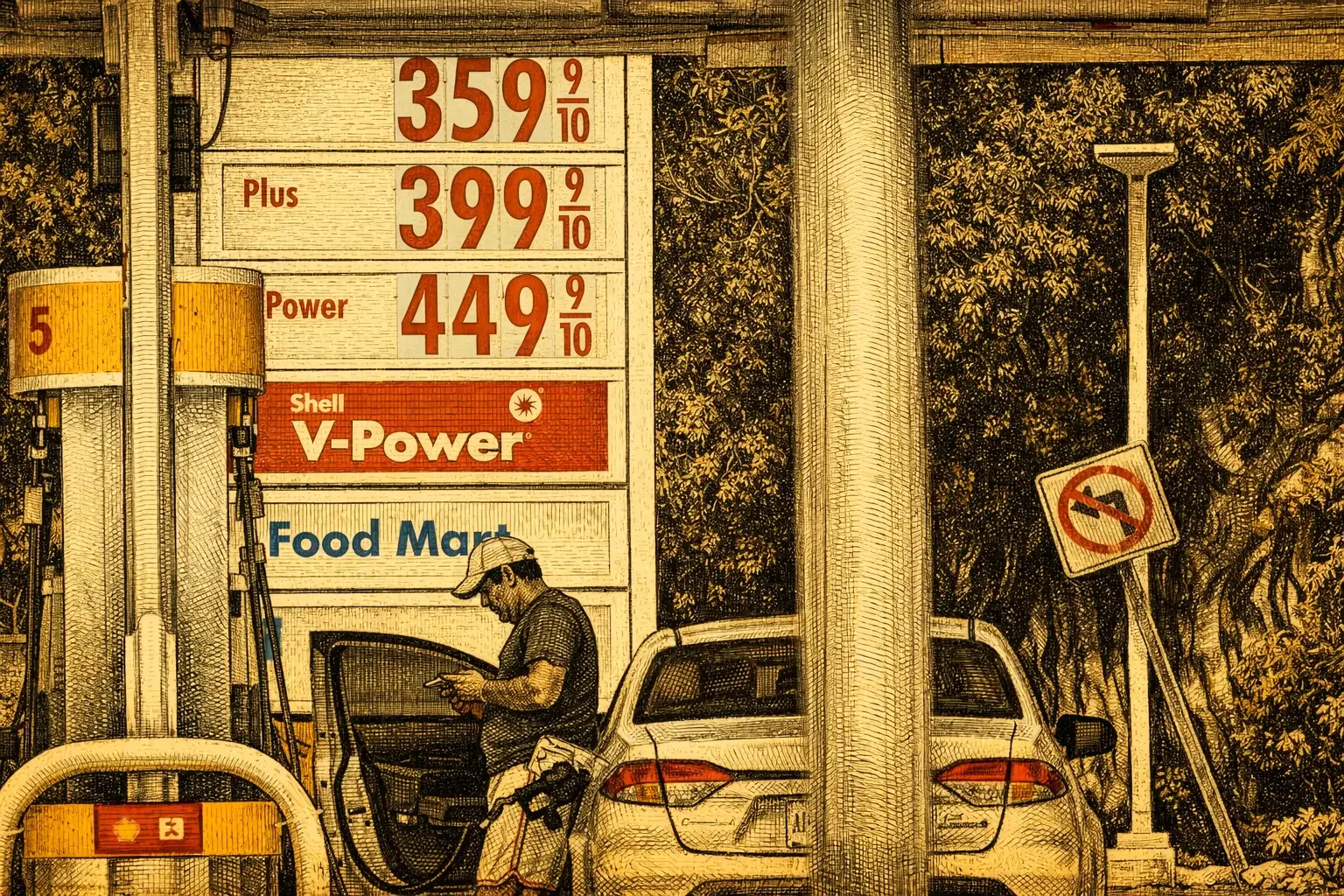
After U.S. and Israeli strikes on Iran, Iran’s closure of the Strait of Hormuz pushed crude above $100 and sent U.S. gasoline from $2.98 to $3.94 within three weeks. The article argues the immediate question is not geopolitics but incidence: a fuel shock functions like a regressive tax that bites hardest where gasoline is a large share of income.
Using estimates from Pantheon and Oxford Economics, it notes the bottom decile spends about 4% of income on gas versus 1.5% for the top, and a year at roughly $3.70 could add about $70B to household fuel outlays. Survey splits show sentiment holding up for equity holders while stagnating for everyone else, and state price gaps amplify the hit. The piece concludes the shock is already tightening budgets and complicating the Fed’s inflation trade-off.

Apply More, Hear Less, Feel Worse
The article argues that weak consumer sentiment is increasingly a jobs story. Unemployment is still low, but hiring is down, applications per opening have surged, and many searches produce no callbacks. People update expectations from signals they can feel, so silence in the job hunt erodes confidence even when top-line labor data looks fine.
It describes a feedback loop: more applicants lead to heavier AI filtering and slower recruiter response, which pushes people to apply even more and feel less capable. That dynamic shows up in survey measures of confidence and helps explain why sentiment is slipping among professional, higher-income households. Mardoqueo concludes that policymakers and employers should track and improve feedback metrics such as hiring rates, response rates and time-to-hire, because these shape spending, saving and voting.

The Fed's Communication Channel is a Broken Functor
The article argues that the Federal Reserve’s biggest problem today is not inflation itself but the failure of its communication to reach ordinary households. While actual inflation has fallen to around 2.7%, many Americans still expect much higher inflation and feel pessimistic about the economy, leading them to behave as if inflation is still a crisis. Using an analogy from category theory, Mardoqueo explains that the Fed’s intended communication chain, from Fed announcements to financial markets to household expectations, no longer works for most people because households pay more attention to everyday prices like groceries than to markets or Fed statements. As a result, inflation expectations remain unanchored, weakening the Fed’s credibility at a sensitive political moment. Until the Fed finds a way to fix or adapt to this broken communication channel, the gap between economic reality and public perception is likely to persist.