

Column

AI Exposure Is Highest Where the Desks Are
The article argues that AI’s first automation shock is likely to hit richer economies harder because their labor markets contain more clerical, professional and digital work. Developing economies face lower immediate exposure, but that is not pure protection. It often reflects weaker electricity, connectivity, institutions and managerial capacity, which limit their ability to turn AI adoption into productivity gains.
Using the proposed Google data center hub in Visakhapatnam as a test case, the piece warns that hosting compute is not the same as building technological sovereignty. Data centers can bring infrastructure, jobs and cloud access, but they also consume scarce power, water and public concessions. The article argues developing economies should prioritize adoption and adaptation before frontier imitation, approving large AI infrastructure only when it leaves behind durable capability, local value capture and broad economic benefit.
Which Half of Your Resume Is AI Making More Valuable?
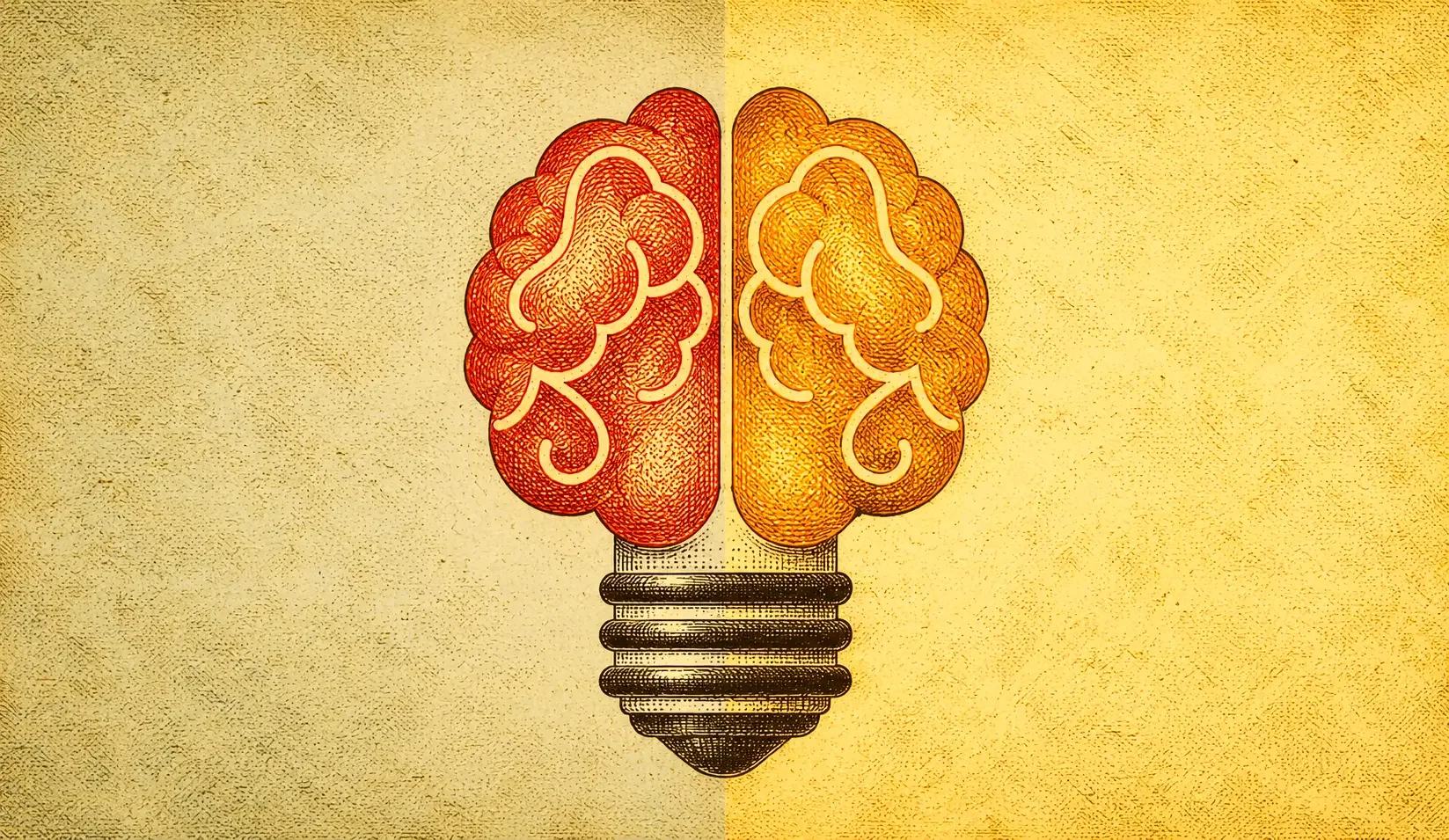
The article argues that AI is splitting the skills market rather than simply making “AI skills” the only valuable credential. LinkedIn’s 2026 data shows fast growth in both technical AI capabilities and human-facing skills such as leadership, stakeholder communication and cross-functional collaboration. The mechanism is scarcity: AI makes structured execution cheaper, while judgment, persuasion and relationship-building become more valuable because they determine how AI is directed and adopted.
It warns that workers who invest only in technical execution may be building the depreciating half of their resume. Structured tasks still matter because AI must be understood and supervised, but differentiation now comes from pairing AI fluency with capabilities machines cannot supply. The piece concludes that technical fluency is the entry ticket, while human judgment and relational authority are the premium.

A Growing Gender Divide in the AI Economy
The article argues that AI is reshaping gender inequality even before the pay gap visibly widens. Women are more concentrated in clerical and administrative roles where AI can restructure work, while men are more concentrated in technical, AI-complementary roles. Among college graduates, the exposure pattern flips, reflecting men’s STEM concentration. Since wage gaps lag task reorganization, exposure and position in the AI investment stack matter more than today’s averages.
It also flags an adoption gap. Surveys find men use generative AI at work more often than women, and few employers offer training. As AI-investing firms shift toward more educated, STEM and IT-heavy workforces and flatter hierarchies, rewards may flow to those closest to deployment. The piece argues leaders can still narrow the divide by widening tool access, funding training early and building ladders into AI-complementary roles.

Pack Your Schedule or Sharpen Your Positioning? Skills High School Students Can Develop in the Age of AI
The article argues that AI is shrinking the value of credentials, so students should avoid resume-stuffing and focus on durable signal. In a world of scarce attention, clear positioning often beats more APs. It highlights two skills. Students need to state how they create value with proof, and ask sharp questions that reveal where opportunities are forming.
For the first, students pick an area, learn the basics, ship a small project, and share their work in a consistent public narrative that cuts through AI noise. For the second, they talk to practitioners, track where startups are hiring, and reach founders before roles hit public job boards and AI filters. The piece urges a few focused hours each week that compound over time, while noting that schools and policymakers still bear responsibility for the wider labor market shock.

If Work Becomes Optional, What Does the State Owe Us?
The article argues that if AI makes work optional for firms, the state must reconsider what it owes workers. It urges study of Universal Basic Employment (UBE): a legally enforceable standing job offer at a set wage and benefits for anyone willing to work.
Drawing on New Deal relief, public service employment and modern subsidized-job trials, it finds higher incomes and social benefits but uncertain net employment due to crowd-out and fiscal substitution. Because UBE is a wage floor, a high wage could pull workers from low-wage private jobs and raise prices; take-up and costs hinge on financing and wage setting. In an AI economy, the key question is whether public jobs absorb labor private firms no longer demand. The article concludes UBE is neither a cure-all nor impossible and deserves rigorous modeling and large-scale tests alongside UBI and dividends.

Universal Basic Income in an AI-Driven Age Part 2: Architecting a Fair Policy
The article argues that universal basic income should not be dismissed in an AI-driven economy, but that its value depends entirely on how it is designed. As automation erodes entry-level jobs and unemployment among graduates remains high, retraining alone is unlikely to solve labor displacement. In that context, a carefully implemented UBI could provide basic economic security, allowing individuals to weather job loss and pursue education or career transitions without immediate financial strain.
At the same time, the article warns that poorly designed UBI programs could reinforce power imbalances and limit mobility. Income thresholds risk creating “cliff effects” that discourage wage growth, while centralized control over eligibility and messaging may deepen class divisions. The author concludes that any serious UBI proposal must focus on incentives, governance, and framing to ensure it empowers recipients rather than entrenching dependence.

Exploring Universal Basic Income in an AI-Driven Age: Economic Security or Power Dynamics?
It's 2026, and as new AI tools seem to emerge every week while unemployment ticks up, some may ask: are we headed toward a Universal Basic Income scheme?
As more and more tasks become automated, from data analytics to summarizing reports and beyond, almost every person I've spoken to lives with a lingering fear that AI could replace their job. Without a job, a person must find an alternative way to pay their living expenses.
Enter the idea of Universal Basic Income (UBI). Under a UBI arrangement, each individual receives a minimum fixed payment, supposedly allowing them to live without earning an income from a job.

Could AI Master Economic Thinking to Solve Real-World Problems?
To many people, the economy represents a vast mystery of supply chains, tariffs, and uncertainty. To most professionals, making everyday business decisions regarding pricing, budgeting, or forecasting demand for a product appears an intractable problem. The study of economics attempts to put some structure on these moving pieces.
With the rise in economic uncertainty spurred by recent societal developments, such as AI, it’s worth asking whether AI itself can provide expert-level economic decision-making for individuals and organizations to sort through the noise.
The AI Paradox: Why Your New Colleague Is Only Coming for Your Entry-Level Job
Last week, I attended a gathering of economists and data scientists from major tech companies, all focused on how technology is reshaping business and work. Practitioners swapped insights on everything from labor market trends to AI experiments. The AI revolution promises to upend how we work and this is happening against the current backdrop of the “pause economy” with hiring and investment in a cautious lull. The discussions ranged from the cooling tech job market to cutting-edge methods in causal inference and AI measurement, and deeper questions about whether AI is a substitute for human work or a “bicycle for the mind.”