

Column

Should the AI Boom Pay Its Way?
The article argues that the AI boom has physical public costs that should not be quietly shifted onto households and municipalities. Data centers require electricity, transmission, substations, water, land, and cooling infrastructure, while a small group of firms captures much of the upside. The case is not to stop AI investment, but to make developers pay for attributable grid, water, and local infrastructure costs in exchange for faster, clearer approvals.
It also proposes a modest, independently governed sovereign wealth fund funded by AI-linked public revenues or infrastructure-use levies. The fund would diversify public exposure, preserve fiscal capacity, and support underprovided capabilities like public-interest compute, cybersecurity and worker-transition pathways. The broader bargain is to trade a little short-term speed for better cost allocation, stronger workplace safeguards, and a public balance sheet that lets households share in AI-driven wealth.

Which Half of Your Resume Is AI Making More Valuable?
The article argues that AI is splitting the skills market rather than simply making “AI skills” the only valuable credential. LinkedIn’s 2026 data shows fast growth in both technical AI capabilities and human-facing skills such as leadership, stakeholder communication and cross-functional collaboration. The mechanism is scarcity: AI makes structured execution cheaper, while judgment, persuasion and relationship-building become more valuable because they determine how AI is directed and adopted.
It warns that workers who invest only in technical execution may be building the depreciating half of their resume. Structured tasks still matter because AI must be understood and supervised, but differentiation now comes from pairing AI fluency with capabilities machines cannot supply. The piece concludes that technical fluency is the entry ticket, while human judgment and relational authority are the premium.

Thoughts on Organizational Capital in an AI Economy
The article argues that AI coding tools are making software products converge, weakening product-layer differentiation and shifting durable advantage toward organizational capital. When interfaces, workflows, and claims can be copied quickly, the defensible assets become customer relationships, proprietary data, distribution and the internal systems that compound talent and judgment over time. Organizational capital matters because it cannot be bought through APIs or reproduced in a sprint.
It extends the argument to workers through “shape-specific human capital.” Skills become valuable only inside organizational forms built to use them. The labor market is therefore less a match between people and jobs than between people and firm structures. The piece warns that emotional validation without structural authority traps workers and concludes that firms and workers must optimize for organizational fit, authority and durable institutional fabric.
AI-Driven Power Dynamics: A New Era in the Long History of U.S. Labor Rights
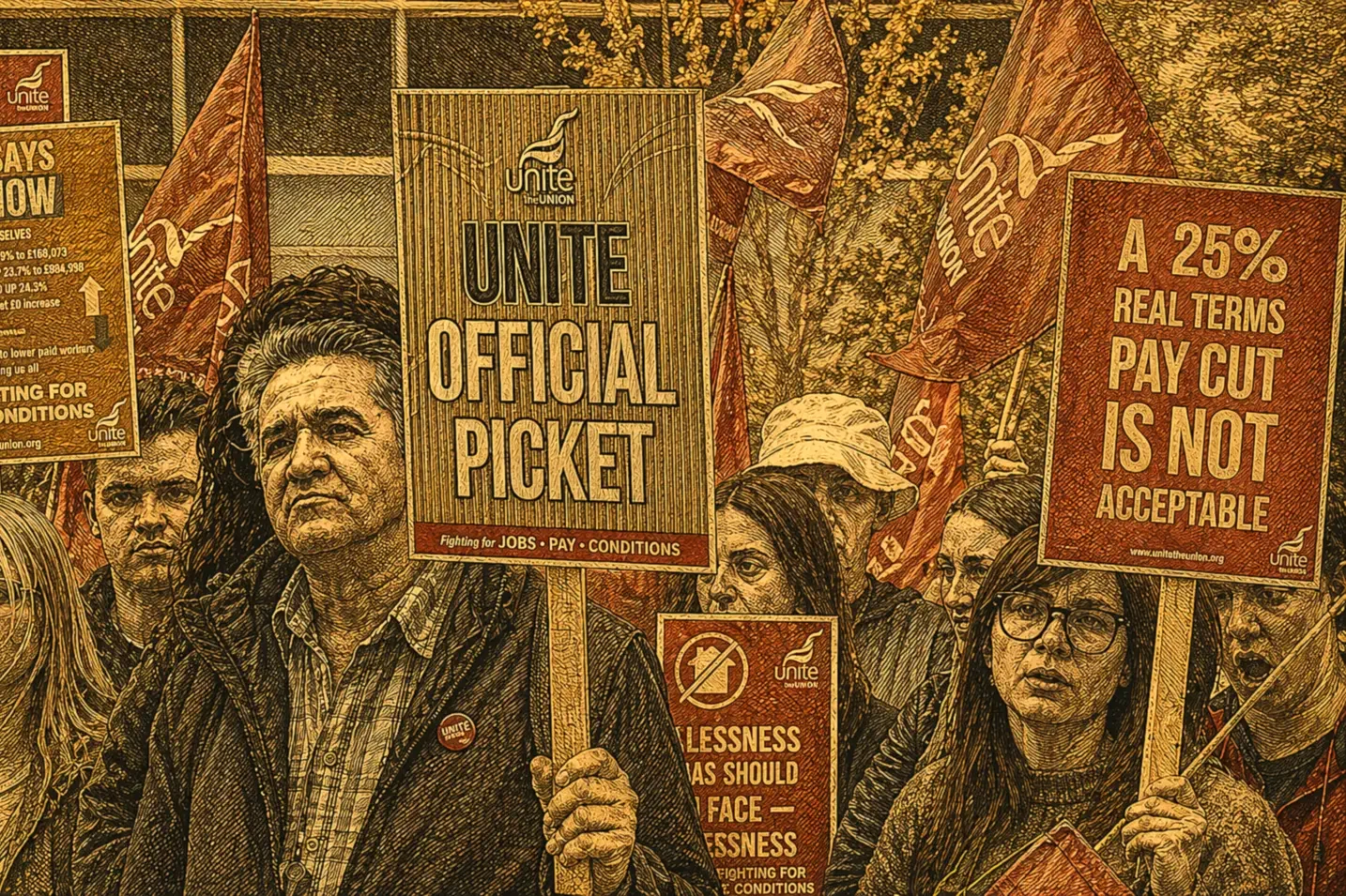
The article argues that today’s difficult job search is not a temporary Gen Z shock but a structural shift in bargaining power toward employers as AI reduces labor demand. After the post-COVID tech hiring boom, overhiring unwound into layoffs and tighter openings. Long jobless spells and weak outside options make workers quieter at work. As automation substitutes for routine tasks, workers accept weaker pay and terms, cling to jobs out of fear and report burnout.
It situates this in a longer U.S. arc where labor protections expanded in the mid-20th century then eroded after the 1980s as unions weakened and capital gained leverage. AI is framed as an accelerant that can decouple growth and profits from job creation. The piece calls for policy responses including UBI, UBE and sovereign wealth dividends to restore baseline security and worker bargaining power.

A Growing Gender Divide in the AI Economy
The article argues that AI is reshaping gender inequality even before the pay gap visibly widens. Women are more concentrated in clerical and administrative roles where AI can restructure work, while men are more concentrated in technical, AI-complementary roles. Among college graduates, the exposure pattern flips, reflecting men’s STEM concentration. Since wage gaps lag task reorganization, exposure and position in the AI investment stack matter more than today’s averages.
It also flags an adoption gap. Surveys find men use generative AI at work more often than women, and few employers offer training. As AI-investing firms shift toward more educated, STEM and IT-heavy workforces and flatter hierarchies, rewards may flow to those closest to deployment. The piece argues leaders can still narrow the divide by widening tool access, funding training early and building ladders into AI-complementary roles.
The Limitations of Means Tested Programs: Unemployment Benefits Won’t Solve Job Seekers' AI-Driven Labor Market Struggle
The article argues that rising inequality and longer jobless spells are exposing the limits of means-tested support. Unemployment Insurance reduces poverty, but weekly benefits rarely match living costs and coverage often ends before many searches do. Programs like the EITC require recent earnings, so households can fall through gaps once UI expires, even with other safety-net programs.
It argues that baseline security should be a rule, not an exception tied to narrow eligibility windows. The alternative is a three-part architecture with a UBI that avoids cliffs and time limits, UBE that offers a standing public job option and sovereign wealth dividends that return part of AI-linked tax gains. Firms can train graduates and hire more deliberately, but the core claim is that durable protection in an AI labor market requires policy.

The Degree as a Weakening Signal: Companies Want AI-ready Grads, but Students Aren’t Prepared
The article argues that the signaling power of a college degree is weakening as AI reshapes hiring today. Employers want graduates who can ship fast, coordinate AI tools across workflows, and apply human judgment with customers. Degree titles matter less than proof through projects and outcomes, which creates a trap for new grads who need jobs to earn the experience that jobs now demand.
It reframes the college choice for students and families as a cost-benefit problem. College can still buy time, networks, and a portfolio, but tuition and debt make prestige a risky default when nondegree paths can offer stability. The piece argues firms must stop treating graduates as liabilities and build clear training pipelines to create "AI-ready" talent. Even that is incomplete without policy that protects living standards as the degree-to-job pipeline breaks.

Grit Won’t Solve Students’ Labor Market Challenges: Redefining Merit and Success for the Younger Generation
The article argues that young people are being set up by outdated social norms that still equate “success” with a prestigious, degree-dependent full-time job. In an AI-disrupted labor market where hiring is weak and searches drain savings, the core issue is not individual effort but a coordination failure: society prepares students for salaried work while the economy supplies fewer stable roles. When expectations lag reality, students can stay stuck chasing shrinking pathways instead of adapting early.
It warns that “grit” and merit narratives can become traps in a market shaped by AI screening, luck, and sudden role closures. The alternative is flexibility and multiple income levers: build a visible personal brand, focus on problems rather than job titles, and stay ready to pivot. For families and schools, the message is to stop treating college and prestige careers as default and to normalize trades, entrepreneurship, and other routes to stability.

The Great Labor Opt-Out
The article argues that the surge in “founder” and “creator” identities is less a cultural shift than a labor supply response to a deteriorating outside option. With hiring stuck well below pre-pandemic levels and job search feedback collapsing, the expected value of traditional job hunting has fallen. Workers who can exit do so, not because self-employment is superior, but because the probability of receiving a viable offer has declined.
It links LinkedIn trends to Census data showing business applications far above pre-pandemic norms, then reframes the surge using “high-propensity” measures: much of the growth looks like low-payroll, freelance, or gig registration rather than classic startup dynamism. This “Haltiwanger inversion” suggests business formation now partly captures labor market blockage. The article concludes that necessity-driven self-employment can reshape B2B demand and may not lift productivity, even if AI tools lower barriers for genuine entrepreneurs.

Trillionaires and Layoffs? An Approach to Redistribute Companies’ AI-Related Wealth
The article argues that AI is widening the gap between owners and workers: job searches are taking longer and wealth is concentrating among those closest to AI profits. It treats UBI as a partial safety net but warns that UBI alone can deepen power asymmetries between recipients and the policymakers who control the rules.
To reduce dependence on UBI, it proposes an Alaska Permanent Fund-style "AI dividend": governments pool part of the tax revenue already collected from AI-linked corporate profits and pay citizens equal annual shares. The goal is a stable, diversified fund that cannot be captured by any single company or elite. Open questions include what counts as an AI company and whether the program should be state or national. The author argues this shares AI gains without betting everything on UBI or reopening major tax fights.

Why the AI Explanation Took Over
The article argues that recent layoffs at profitable firms are being misread as AI-driven job replacement. The real drivers are post-pandemic demand normalization after the 2020–2022 hiring boom and the repricing of capital once rates jumped, which made boards and investors demand visible efficiency. Layoffs became a signal of discipline and margin protection, often paired with AI and data-center commitments.
AI matters mostly as framing and capital-allocation justification. Productivity gains are hard to measure, but headcount cuts show up immediately in revenue-per-employee, so executives cite AI to explain why labor costs must fall now. The cuts also reshuffle power by trimming recruiters, coordinators and middle managers while protecting core engineers and AI specialists, producing leaner, centralized firms. The article concludes this is rebalancing, not collapse, and urges leaders to base decisions on regime shifts and measurable signals, not headlines.

Apply More, Hear Less, Feel Worse
The article argues that weak consumer sentiment is increasingly a jobs story. Unemployment is still low, but hiring is down, applications per opening have surged, and many searches produce no callbacks. People update expectations from signals they can feel, so silence in the job hunt erodes confidence even when top-line labor data looks fine.
It describes a feedback loop: more applicants lead to heavier AI filtering and slower recruiter response, which pushes people to apply even more and feel less capable. That dynamic shows up in survey measures of confidence and helps explain why sentiment is slipping among professional, higher-income households. Mardoqueo concludes that policymakers and employers should track and improve feedback metrics such as hiring rates, response rates and time-to-hire, because these shape spending, saving and voting.