

Column

When Economic Pain Fails to Buy Political Compliance
The article argues that sanctions are effective at imposing economic and technological costs, but much less reliable at forcing political compliance. Iran’s experience shows the distinction: severe GDP losses and financial isolation helped create leverage for the JCPOA, but only because pressure was paired with negotiated sanctions relief and a defined off-ramp. Sanctions work best when demands are limited, dependence is high, substitutes are scarce, pressure is fast and compliance is credible.
It warns that prolonged pressure can lose coercive power as targets adapt through rerouting, shell firms, friendly intermediaries and smuggling networks, while civilians often bear unequal costs. Sanctions can still degrade capabilities, especially through finance and technology controls, even when leaders refuse to change core security policies. The piece concludes that economic coercion works as leverage and containment, not as a machine for changing what states consider vital.

Booming or Just Not Yet Broken?
The article argues that the U.S. is not in recession, but it is not broadly booming either. Payrolls, GDP, consumer spending and business investment still show expansion, so the economy has not met official recession thresholds. Yet households experience a narrower, more expensive economy: long-term unemployment is rising, real income growth is thin, savings are low and delinquencies are worsening. The gap between aggregate strength and lived strain explains why “booming” feels false to many Americans.
It frames the Iran conflict as an added stressor rather than the sole cause of recession risk. Higher oil and gasoline prices act like a regressive tax, squeeze business margins and complicate the Fed’s inflation-growth trade-off. Asset-heavy households and capital-intensive sectors may still benefit, but commuters, renters, borrowers and small businesses face mounting pressure. The conclusion: the economy has not broken, but absence of recession is not proof of a boom.
The War Tax You're Already Paying
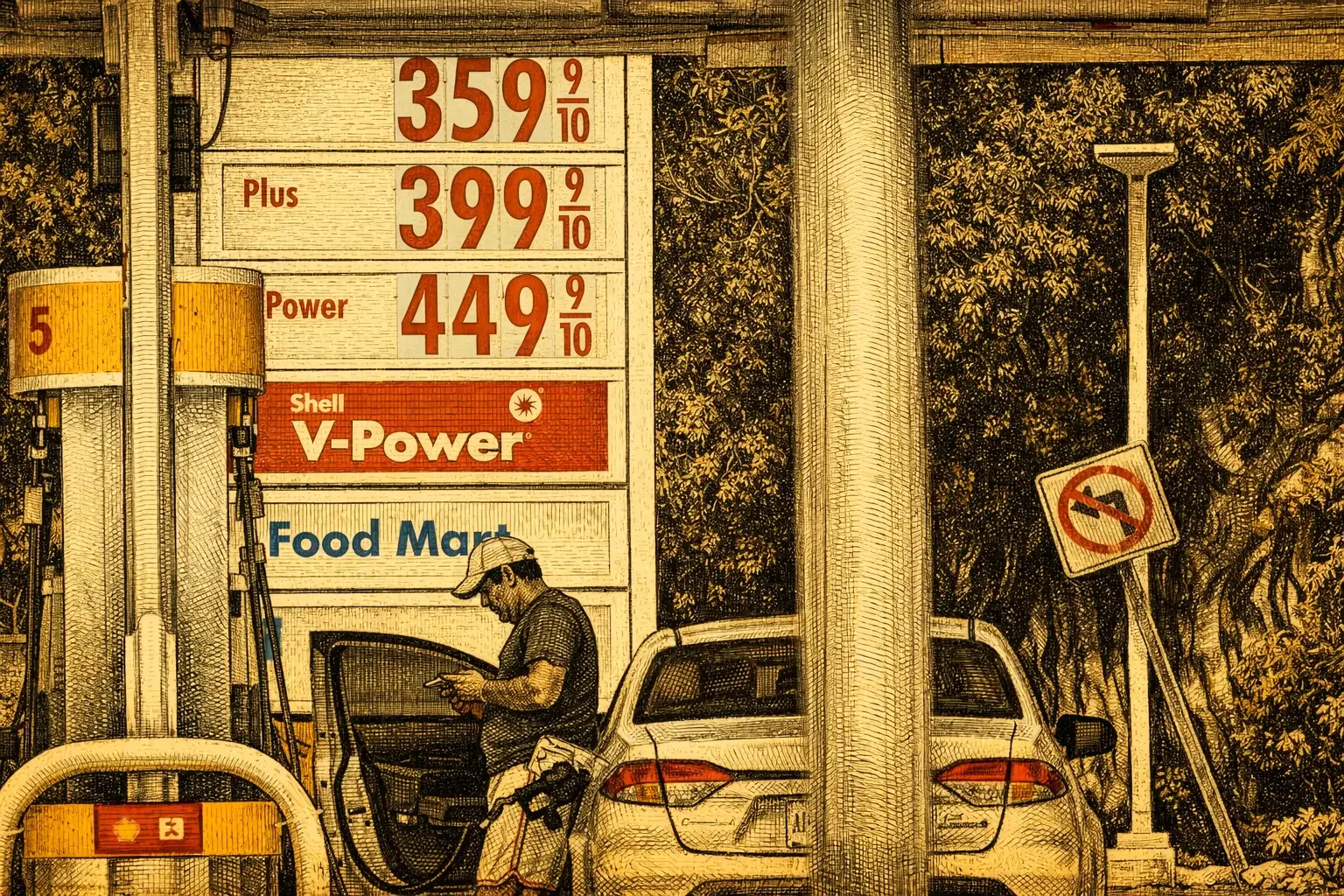
After U.S. and Israeli strikes on Iran, Iran’s closure of the Strait of Hormuz pushed crude above $100 and sent U.S. gasoline from $2.98 to $3.94 within three weeks. The article argues the immediate question is not geopolitics but incidence: a fuel shock functions like a regressive tax that bites hardest where gasoline is a large share of income.
Using estimates from Pantheon and Oxford Economics, it notes the bottom decile spends about 4% of income on gas versus 1.5% for the top, and a year at roughly $3.70 could add about $70B to household fuel outlays. Survey splits show sentiment holding up for equity holders while stagnating for everyone else, and state price gaps amplify the hit. The piece concludes the shock is already tightening budgets and complicating the Fed’s inflation trade-off.
Can We “Win” the AI Race Together?
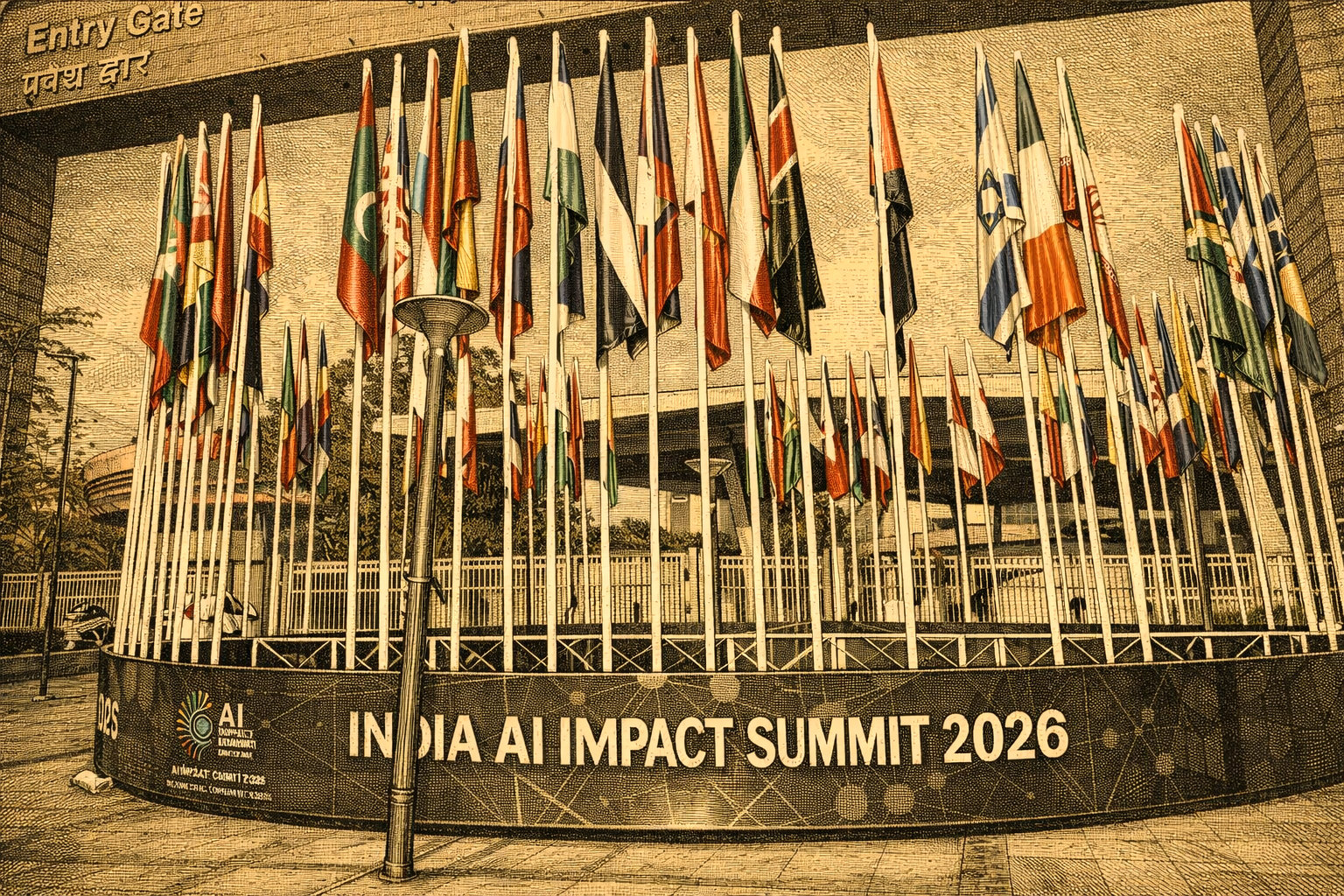
The article argues that the “AI arms race” framing is colliding with the economics of AI. Governments want scale and interoperability, but also sovereignty: control over data, compute, models, standards and talent. Since the full stack is too costly for most states, sovereignty becomes modular risk management, and energy constraints make compute a strategic bottleneck. Cloud regions still sit under jurisdiction, so access can become a bargaining chip.
Collaboration still pays where externalities cross borders: safety science, benchmarking, incident sharing and interoperable standards. This creates layered coexistence: open coordination at the bottom, control at the frontier. The U.S. pairs safety cooperation with export controls, the EU pools capacity via the AI Act and AI Factories, China enforces tight domestic rules and India bets on sovereignty-through-access and open ecosystems. The takeaway: treat access risk, energy and standards as first-order strategy variables.

Stop Doomscrolling, and Start Stress-Testing: How Geopolitics Hits the Economy and Your Wallet
On Saturday, my phone didn’t just buzz… it practically tried to achieve orbit!
I had actually managed to fall asleep like a responsible adult who swears they’re “cutting back on news,” and then woke up to an avalanche of alerts about a major geopolitical rupture in Venezuela. You know, the kind of headlines that makes you blink twice and think, “oh, geeze… not again! Not another one!” Somewhere in my brain, the Chris Farley meme was already putting on its awful, brown tie and reporting for duty: “Getting pretty tired of living through historical events.”
That joke may be doing an irresponsible amount of emotional labor right now. And for that, I apologize.
BRICS, the Dollar, and the Real Economics Behind the Global Power Shift
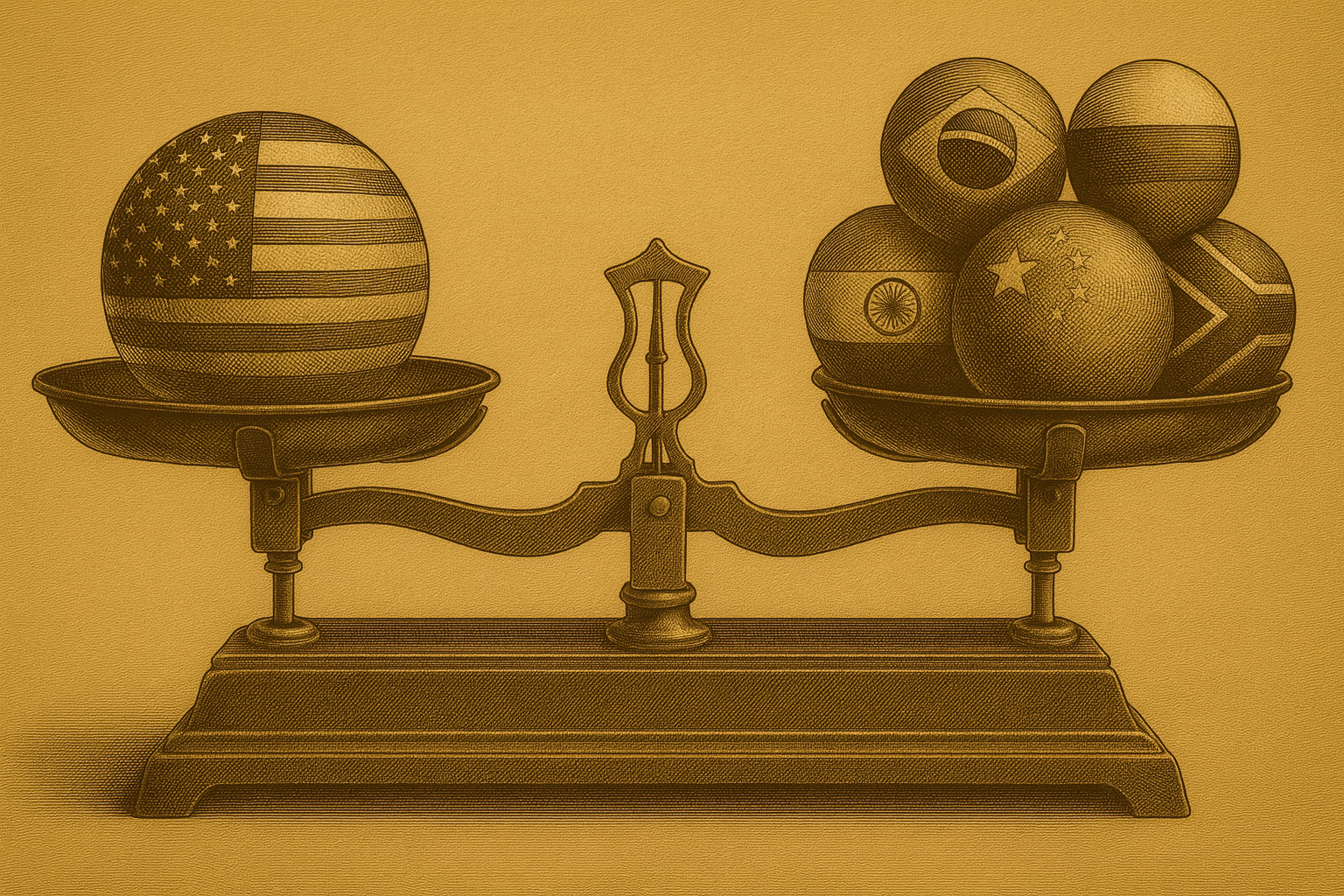
For context, I am currently staying in New Delhi. And during Putin’s recent visit to India, the city took on a charged, contemplative mood. Conversations among colleagues and clients kept circling back to a familiar question: Is the world finally tilting away from the United States and toward a BRICS bloc? Well, while Putin was in town, I attended a talk hosted by the Chintan Research Foundation that explored the state of India-Russia relations and the shifting dynamics inside a BRICS / Eurasian Economic Union grouping that continues to expand and evolve. The timing made the discussion feel especially immediate.
Sitting there, I understood why so many people ask whether the United States is losing its grip. I hear the fear frequently from colleagues and clients. They see BRICS expanding. They see the headlines about de-dollarization. They watch policymakers spar over sanctions, AI, and global rules. And they wonder whether the world is moving into a new era where the dollar stumbles and a coalition of emerging economies seizes the strategic high ground.