

Column

Grit Won’t Solve Students’ Labor Market Challenges: Redefining Merit and Success for the Younger Generation
The article argues that young people are being set up by outdated social norms that still equate “success” with a prestigious, degree-dependent full-time job. In an AI-disrupted labor market where hiring is weak and searches drain savings, the core issue is not individual effort but a coordination failure: society prepares students for salaried work while the economy supplies fewer stable roles. When expectations lag reality, students can stay stuck chasing shrinking pathways instead of adapting early.
It warns that “grit” and merit narratives can become traps in a market shaped by AI screening, luck, and sudden role closures. The alternative is flexibility and multiple income levers: build a visible personal brand, focus on problems rather than job titles, and stay ready to pivot. For families and schools, the message is to stop treating college and prestige careers as default and to normalize trades, entrepreneurship, and other routes to stability.

The Great Labor Opt-Out
The article argues that the surge in “founder” and “creator” identities is less a cultural shift than a labor supply response to a deteriorating outside option. With hiring stuck well below pre-pandemic levels and job search feedback collapsing, the expected value of traditional job hunting has fallen. Workers who can exit do so, not because self-employment is superior, but because the probability of receiving a viable offer has declined.
It links LinkedIn trends to Census data showing business applications far above pre-pandemic norms, then reframes the surge using “high-propensity” measures: much of the growth looks like low-payroll, freelance, or gig registration rather than classic startup dynamism. This “Haltiwanger inversion” suggests business formation now partly captures labor market blockage. The article concludes that necessity-driven self-employment can reshape B2B demand and may not lift productivity, even if AI tools lower barriers for genuine entrepreneurs.

Why the AI Explanation Took Over
The article argues that recent layoffs at profitable firms are being misread as AI-driven job replacement. The real drivers are post-pandemic demand normalization after the 2020–2022 hiring boom and the repricing of capital once rates jumped, which made boards and investors demand visible efficiency. Layoffs became a signal of discipline and margin protection, often paired with AI and data-center commitments.
AI matters mostly as framing and capital-allocation justification. Productivity gains are hard to measure, but headcount cuts show up immediately in revenue-per-employee, so executives cite AI to explain why labor costs must fall now. The cuts also reshuffle power by trimming recruiters, coordinators and middle managers while protecting core engineers and AI specialists, producing leaner, centralized firms. The article concludes this is rebalancing, not collapse, and urges leaders to base decisions on regime shifts and measurable signals, not headlines.

Apply More, Hear Less, Feel Worse
The article argues that weak consumer sentiment is increasingly a jobs story. Unemployment is still low, but hiring is down, applications per opening have surged, and many searches produce no callbacks. People update expectations from signals they can feel, so silence in the job hunt erodes confidence even when top-line labor data looks fine.
It describes a feedback loop: more applicants lead to heavier AI filtering and slower recruiter response, which pushes people to apply even more and feel less capable. That dynamic shows up in survey measures of confidence and helps explain why sentiment is slipping among professional, higher-income households. Mardoqueo concludes that policymakers and employers should track and improve feedback metrics such as hiring rates, response rates and time-to-hire, because these shape spending, saving and voting.
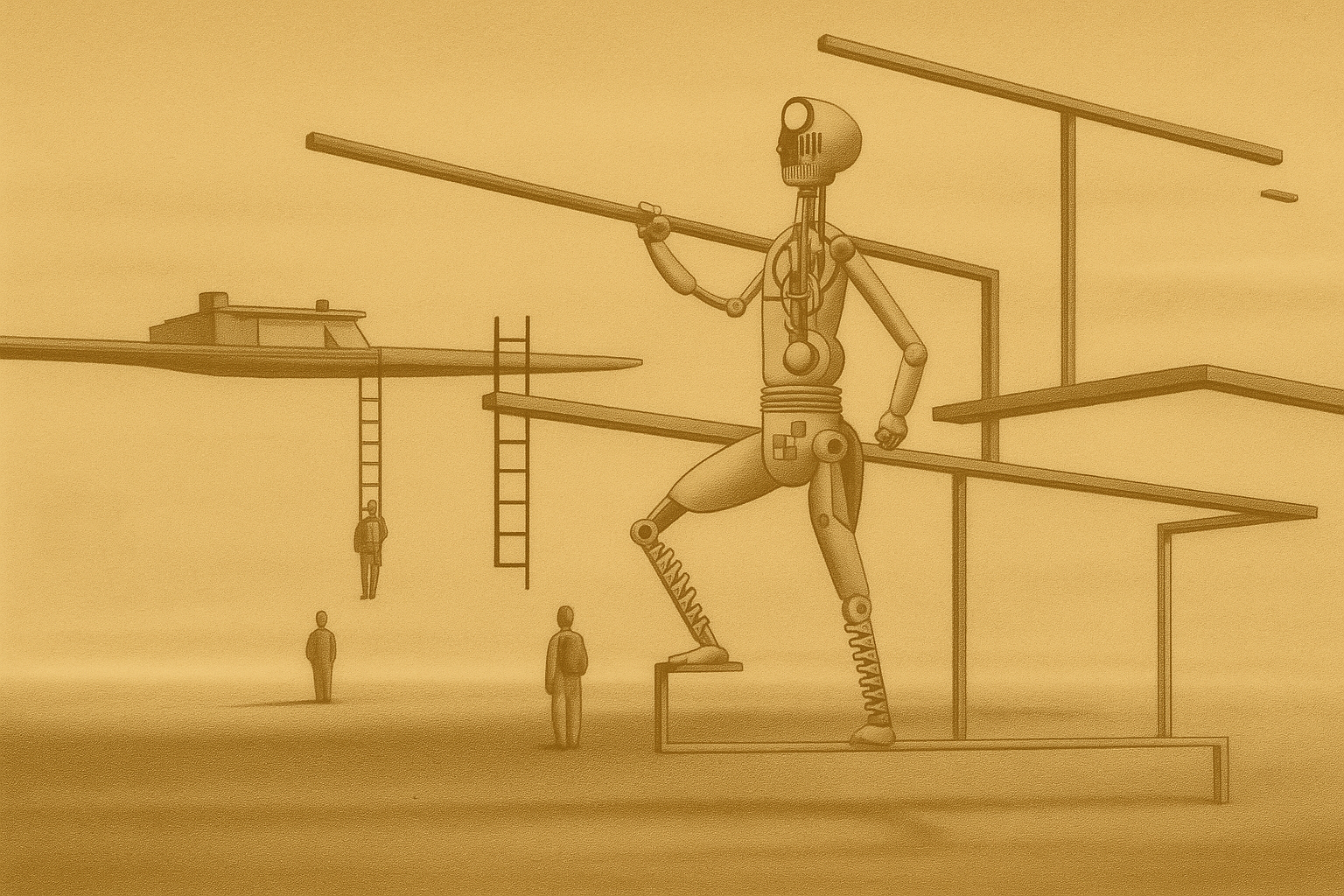
The AI Paradox: Why Your New Colleague Is Only Coming for Your Entry-Level Job
Last week, I attended a gathering of economists and data scientists from major tech companies, all focused on how technology is reshaping business and work. Practitioners swapped insights on everything from labor market trends to AI experiments. The AI revolution promises to upend how we work and this is happening against the current backdrop of the “pause economy” with hiring and investment in a cautious lull. The discussions ranged from the cooling tech job market to cutting-edge methods in causal inference and AI measurement, and deeper questions about whether AI is a substitute for human work or a “bicycle for the mind.”