

The Limitations of Means Tested Programs: Unemployment Benefits Won’t Solve Job Seekers' AI-Driven Labor Market Struggle
by Melissa Carleton
The U.S. income distribution is becoming more and more right-tailed. The share of wealth held by the top 1% has steadily increased and reached its highest level in recent history as of late 2025.
Meanwhile, job seekers are struggling in today's AI-driven labor market. For many, the labor market can involve a months-long struggle. Today, one in four job seekers has been unemployed for more than six months. One estimate found that unemployment can consume as much as $50,000 within three months.
Upon noticing these trends, many people instinctively feel that redistribution could provide a solution. However, most potential mechanisms for redistribution come with caveats. Raising taxes on the already wealthy can trigger political backlash, and increasing funding for social programs could inflate overall tax rates.
For these reasons, Kent and I have argued for a multi-pronged approach involving carefully designed policies such as Universal Basic Income, Universal Basic Employment, and Sovereign Wealth Dividends in our recent White Paper. These programs, if implemented thoughtfully, could provide a trifecta of solutions to address different aspects of job seekers’ concerns in an AI-driven labor market.
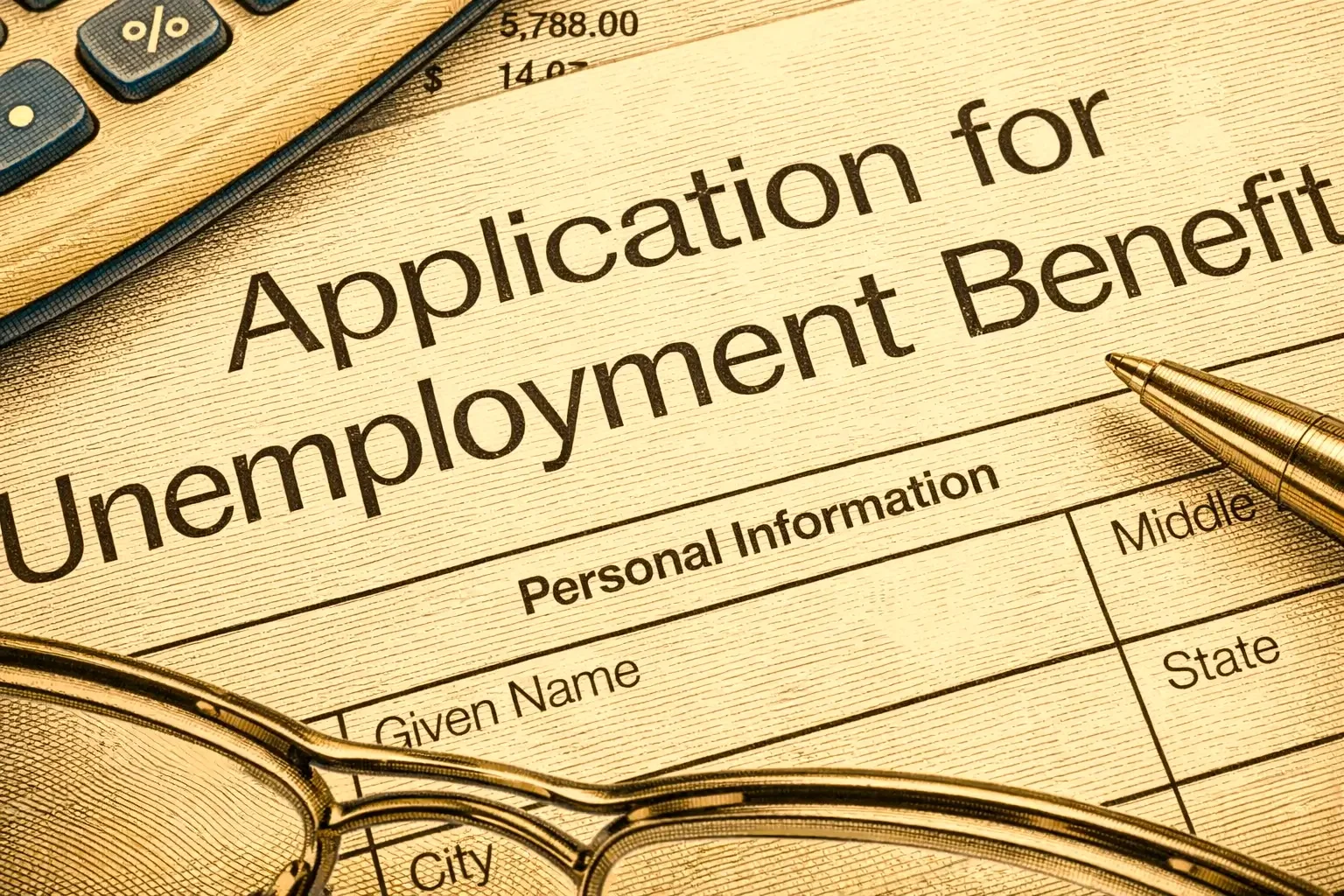
However, one of the most common reactions I’ve received is that people agree with the concept of redistribution but question whether we should fund existing benefits programs instead. With so much economic uncertainty, why not go with a tried-and-true program that's been around for a while?
This is a fair question, and one that I take up in this article. In particular, I explore the limitations of means-tested programs in the United States, such as Unemployment Insurance, in an environment where unemployment spells can last months to a few years.
The Upsides and Limitations of the U.S. Unemployment Insurance Program
I've noticed a sad trend on my LinkedIn feed involving individuals posting about their prolonged job searches. Some are on the verge of becoming homeless and link a GoFundMe page with their post as a call for immediate relief. In one post, I read about an individual who has been searching for over a year and a half, cares for a daughter, and relies on food stamps. On the surface, these stories may seem to be the reason why unemployment insurance programs exist in the first place.
On the one hand, they are a powerful anti-poverty tool for those who need them the most. One study compared the outcomes of households that received unemployment benefits and those that did not at the height of the COVID-19 pandemic. During that time, roughly one in six U.S. adults, or around 40 million people, received unemployment benefits. According to the Census Bureau, access to unemployment benefits reduces the official poverty rate from 12.9% to 11.4%. This prevented 4.7 million people, including 1.4 million children, from falling into poverty in 2020.
The importance of unemployment benefits as an anti-poverty measure cannot be overstated. However, examining how unemployment benefits programs are actually structured makes it clear that they are not a panacea for job seekers’ struggles in an AI-driven labor market.
Given that they only provide a few hundred dollars each week at most, and sometimes much less, it's clear they cannot keep up with the cost of living. A single adult with no dependents requires approximately $23.06 per hour in Dallas County and $32.85 per hour in New York County to meet basic needs and remain self-sufficient. These figures exceed the amount of benefits offered in most states.
Furthermore, the key limitation of unemployment insurance benefits is that they no longer cover the duration of a typical unemployment spell as of 2026. As mentioned, one in four unemployed workers who are searching for work have been unemployed for more than six months. If they rely on unemployment benefits, what happens when these benefits run out?
Other Social Programs
Several programs apart from unemployment benefits play a part in easing poverty. The Earned Income Tax Credit (EITC) helps low-income or middle-income workers and families lessen their tax burden. Qualifying individuals can use their tax credit to reduce the taxes they owe or increase their tax refund.
However, this program requires that one has recently earned an income. If someone has been job searching for more than six months and still cannot find a job, then they cannot claim the EITC. They also cannot continue to claim unemployment benefits once their benefits period has expired.
The United States also has several other programs to help low- to middle-income individuals. Medicaid provides free or low-cost health coverage for low-income individuals and families. Several housing programs, such as the Section 8 program, seek to help with rent payments or utility bills. Altogether, anti-poverty programs can provide a substantial safety net for individuals.
However, as individuals struggle to find work in an AI-driven labor market, the demand for social programs could outpace the available budget. Moreover, for the worker who's been out of work for six months after exhausting their unemployment benefits, the combination of food stamps, Section 8 housing, and Medicaid is unlikely to meet their needs.
Slightly changing the terms and expanding the budgets of existing social programs, such as providing up to nine months of unemployment benefits instead of six, could make a difference. However, this approach would ignore the fact that the very structure of the economy is changing. In an AI-driven labor market, fundamental economic support should be a rule rather than an exception, wrapped up in a program with screening criteria that will inevitably continue to exclude some.
What’s the Solution?
I've made the case for why existing benefits programs in the United States are insufficient on their own to respond to the growing need for worker protection in an AI-driven labor market. While we should certainly continue to invest in these programs due to their powerful anti-poverty effects, it's time to explore alternatives.
In our White Paper, we advocate for a carefully designed form of Universal Basic Income. One advantage of a Universal Basic Income is the “universal” element. It would not include term restrictions or excessive background checks. It would preserve accessibility and optionality for many, from those deep in an unemployment spell to those looking to pivot and future-proof their careers.
There is a clear trade-off here. Adding too many restrictions on who receives the income could swing it to the extreme, where individuals in hardship face the burden of proving or justifying their situation. Adding too few restrictions would lead individuals who are far from needing an additional source of income to take up valuable resources of the program.
Moreover, the question of financing a UBI program would require significant analysis. Andrew Yang, in his book "The War on Normal People," which advocates for UBI, suggests a 10% value-added tax on goods and services, capturing value generated by large corporations. Although I would argue for a solution that looks beyond what Yang proposes, a value-added tax, so long as it doesn't fall on consumers, may be a promising avenue of exploration.
We also discuss Universal Basic Employment in our White Paper. A carefully designed UBE policy would protect certain jobs and preserve the function of some paid work by providing it as a guarantee. As the private sector is no longer reliably offering employment at scale for those looking, the public sector could provide a steady offer of work with wages and benefits to anyone eligible and willing to work. It would preserve part of the social aspect of work, where people prefer job guarantees over benefits as they find jobs meaningful.
Economic research by Kuziemko et al. (2026) has also shown that less-educated voters are more likely to prefer “predistribution” policies over “redistribution” policies. That is, they prefer protection before hardship sets in: for instance, job protection is preferred over unemployment benefits. Accordingly, a UBE policy could provide a powerful complement to a UBI policy to preserve meaningful pathways to employment.
We also introduce the suggestion of Sovereign Wealth Dividends. This approach would seek to socialize wealth that AI generates and return it to the public as a shared dividend. It wouldn't rely on large-scale social programs, and at least part of the gains from AI-generated wealth could flow back to the citizenry.
If governments were to adopt a consistent definition of AI-generated wealth, then they could meaningfully fund a safety net in an AI-driven labor market. This approach would not require raising taxes. As AI grows, adjacent sectors are not only generating more income; they're also paying higher taxes. Setting aside part of this tax revenue towards the public could provide a social safety net that prevents emerging social collapse from prolonged unemployment.
Concluding Thoughts
Means-tested programs can provide an essential safety net for individuals caught in the middle of an AI-driven labor market. But they’re not the only solution, and they're not sufficient to cover the overwhelming need for economic relief in 2026. As unemployment spells stretch longer with no end in sight, we must ensure we protect individuals who still have bills to pay.
It's not only unemployed individuals who could benefit. Allowing middle-income individuals to receive some form of UBI could support social flourishing and allow them to pivot or reach their goals faster. Upward mobility could increase, and the average individual could begin to feel as if the economy is actually working for them.
Social programs such as UBI, UBE, and Sovereign Wealth Dividends that don't rely on eligibility checklists or short time windows could ensure broader access and shared prosperity of AI-related wealth gains. If these programs are framed convincingly, individuals will feel as if they're participating in capturing a portion of AI-driven wealth. While the approaches I suggest in this article can fill practical gaps in the fabric of existing programs, the principle of ensuring broader economic participation and inclusion is just as consequential.
Works Cited:
Bhupathi, Kent O. “Markets are Trading on Uncertainty. But Households Don't Have To.” The Honest Economist. November 2025. https://www.honesteconomist.com/column/householdfinanceuncertainty?rq=uncertainty
Bhupathi, Kent O. and Melissa Carleton. “Rethinking Income in an AI-Generated Economy.” The Honest Economist. March, 2026 https://www.honesteconomist.com/rethinking-income-ai-economy
Kuziemko, Ilyana, Nicolas Longuet-Marx, and Suresh Naidu. “Compensate the Losers?” Economic Policy and the Origins of U.S. Partisan Realignment. The Quarterly Journal of Economics, April 1, 2026, https://doi.org/10.1093/qje/qjag019
Traub, Amy. “7 Things We Learned About Unemployment Insurance During the Pandemic.” National Employment Law Project, November 16, 2021. https://www.nelp.org/insights-research/7-things-we-learned-about-unemployment-insurance-during-the-pandemic
U.S. Government. Unemployment benefits. USA.gov. https://www.usa.gov/unemployment-benefits
Yang, A. “The War on Normal People.” Wikipedia. https://en.wikipedia.org/wiki/The_War_on_Normal_People