

by Melissa Carleton
Much of the current dialogue on the labor market in the age of AI treats workers’ struggles as temporary shocks. It’s easy to view the predicament of Gen Z workers navigating a tough job search as generational bad luck. Among the 1 in 4 unemployed workers in the U.S. who have remained unemployed for over 6 months, many face individual hardship, but their predicament suggests a broader economic change.
That change is the shifting power dynamic between employers and workers in an AI-driven economy. In times where employees hold relatively more power, they can more easily negotiate wages and experience more choice in the jobs they take. In times where employers hold relatively more power, the reverse is true. In 2026, the balance of power is increasingly shifting towards employers.
For a few years after the COVID-19 crisis of 2020, the balance seemed to shift in workers' favor in many industries. In the tech industry, tech firms began aggressively recruiting as demand for tech talent rose. Large companies, including Amazon, Meta, and Zoom, offered attractive packages and signing bonuses to new hires, as open tech roles in 2021 rose 81% relative to 2019 levels.
However, the tech industry eventually realized it had over-hired. The Bay Area added 74,700 tech jobs from 2020 to 2022, but the trend reversed from 2023 to 2024 when employers cut 80,200 of these jobs.
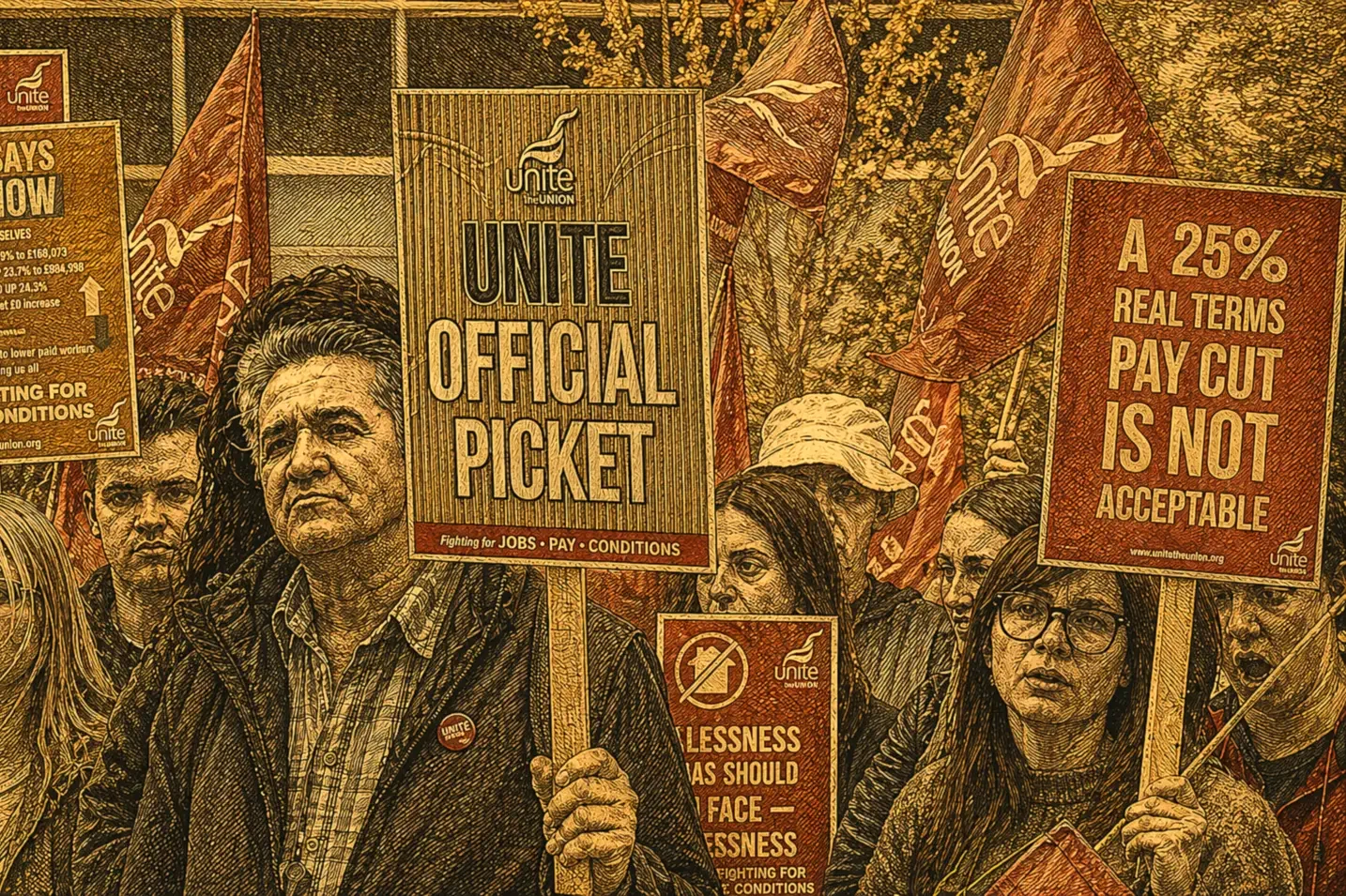
Although this trend began before widespread AI adoption, the AI-driven labor market fallout that first appeared in the data in 2025 is continuing to erode the power of workers relative to employers. For example, ServiceNow CEO Bill McDermott quipped that “AI agents don't need any lunch and they don't have any health care benefits.” Employers increasingly view workers as disposable when AI can complete tasks that leaders previously delegated to humans.
This change in power dynamics between employees and workers is not an isolated phenomenon coinciding with the business cycle. Instead, the potential of AI technology is unknown, and its impact on workers’ relative power is bound to impact the future. For the remainder of this article, I explain what accounts for the shift and situate current trends in a broader historical context of labor rights in the United States.
Labor Supply and Labor Demand
When AI can accomplish tasks previously delegated to humans, employees lose relative value in employers’ eyes. In this environment, where labor supply (the number of people looking for jobs) increases relative to labor demand (the number of workers that firms want to hire), workers face a weaker position.
When firms struggle to attract top talent, they offer higher wages. The logic is that if they raise their wages, then more workers will apply for the position, and companies can fill their labor shortages. Firms compete with each other over workers rather than the reverse, and perks such as remote work and generous benefits are offered. These dynamics marked the tech hiring boom of 2022.
When AI can complete the work of several experienced coders, junior analysts formatting slides in a consulting firm, or interns scanning documents, firms no longer value human labor the way they once did. Job openings decrease, and workers must compete to secure jobs at firms.
As a result, workers have less power to negotiate over their wages. They may feel lucky to receive any job offer after a long search, when many of their peers are still searching. They may accept their first offer, rather than their ideal offer, regardless of whether it pays well according to their internal standards from two years ago.
The consequences are both monetary and psychological. Because they know the outside market is bad, they're less likely to speak up or take risks at work for fear of losing their job. One February 2026 article referred to modern-day job-hugging as the new “quiet quitting." According to the article, employees are not staying in their current jobs not because they want to, but because they have to. They're more likely to face burnout, leaving them with little energy for activities outside of work.
What appears to be an isolated phenomenon that’s bad for workers today is actually the beginning of the erosion of a long history of labor rights in the United States.
A New Precedent in a Long History
In the mid-19th century, workers began to push back as industrialization came with low pay, long hours, and hazardous conditions. In 1866, Samuel Gompers founded the American Federation of Labor and successfully negotiated wage increases and shorter hours for skilled workers.
In 1913, the federal government created the Department of Labor, which passed the Clayton Antitrust Act in 1914. This act enforced workers' rights to strike and boycott. The Fair Labor Standards Act of 1938 set national legal standards for minimum wage, overtime pay, and child labor.
The New Deal legislation, including the Wagner Act, further enforced the protection of workers' rights. By the 1950s, around one-third of the private sector was unionized. These changes spurred rising wages, a growing middle class, and a higher labor share of income (the payments accrued to workers relative to capital owners).
But during the 1980s, the trend began to reverse. The labor share of income fell, and unions weakened. Shareholder power increased, and relative minimum wages eroded. Private sector union density dropped to 6% as of 2020.
Although AI-driven automation is not the original cause of declining worker power, it is certainly an accelerant. In an AI-driven economy, job seekers struggle more than ever to find a job. Meanwhile, GDP is growing, and companies, especially those most adjacent to AI development, are pulling in record profits, as Kent Oliver Bhupathi and I highlighted in our recent White Paper.
What's particularly unique about this episode in history, as we also highlighted, is that good economic times no longer translate to broad prosperity for workers. Historically, layoffs have been associated with bad economic times, such as the 2008 recession. Now that leaders reference AI development to justify layoffs, and that labor supply has increased relative to labor demand, what looks like “good economic times” on paper hides the erosion of workers’ rights.
When workers feel lucky to have a stable job with a livable wage, and capitalists control the income, it's easy to see who benefits and who becomes more vulnerable to exploitation. Workers with less security are more vulnerable to low pay and even workplace abuse. If we, as a society, fail to fully recognize these trends for what they are, we can undo decades of progress that historical figures have advocated for in the labor market.
Concluding Thoughts
As of 2026, the media is finally beginning to see workers struggle in the labor market more clearly. More news articles are being published discussing long-term unemployment and the difficulty college workers face in finding entry-level jobs.
What's less discussed is how these phenomena are shifting the power dynamics of employees relative to employers. This trend is accelerating the erosion of years of legislation that activists and leaders have diligently fought to implement. Viewing today's episodes in the larger historical context where they belong should motivate policymakers to enact legislation that protects workers' rights.
Kent and I discuss approaches such as Universal Basic Income, Universal Basic Employment, and Sovereign Wealth Dividends in our White Paper. This is the beginning of an ongoing agenda, and one that we must prioritize to ensure fairness for workers in an AI-driven era for years to come.
Works Cited:
Alexander, Nikita. “Job Hugging Is the New Quiet Quitting… Only Worse.” HRD Connect, February 26, 2026,https://www.hrdconnect.com/2026/02/26/job-hugging-is-the-new-quiet-quitting-only-worse/
Christian, Alex. “Why ‘Job Hugging’ Can Be Worse Than Quitting.” Fast Company, December 4, 2025, https://www.fastcompany.com/91447592/the-hidden-psychological-costs-of-job-hugging
De Loecker, J., Eeckhout, J., & Unger, G. (2020). The rise of market power and the macroeconomic implications. The Quarterly Journal of Economics, 135(2), 561-644, https://ungated.research.bowdoin.edu/article/3194
Fine, Janice, Daniel Galvin, Jenn Round, and Hana Shepherd. “Wage Theft in a Recession: Unemployment, Labor Violations, and Enforcement Strategies for Difficult Times.” Institute for Policy Research Working Paper Series, Northwestern University, February 18, 2021. https://www.ipr.northwestern.edu/documents/working-papers/2021/wp-21-09.pdf
Stansbury, Anna, and Lawrence H. Summers. “Declining Worker Power and American Economic Performance.” Brookings Papers on Economic Activity (Spring 2020), March 18, 2020,https://www.brookings.edu/articles/declining-worker-power-and-american-economic-performance/
Union Plus. “A Brief History of Unions.” Union Plus, n.d.,https://www.unionplus.org/page/brief-history-unions/
U.S. Department of Labor. “Bicentennial History of the American Worker.” U.S. Department of Labor, n.d.,https://www.dol.gov/general/aboutdol/history/amworkerintro
Vogelzang Law. “The History of Labor Unions in America.” January 8, 2025, https://vogelzanglaw.com/the-history-of-labor-unions-in-america/
Wikipedia Contributors. “Labor Unions in the United States.” Wikipedia, Wikimedia Foundation, 2026,https://en.wikipedia.org/wiki/Labor_unions_in_the_United_States