

Column
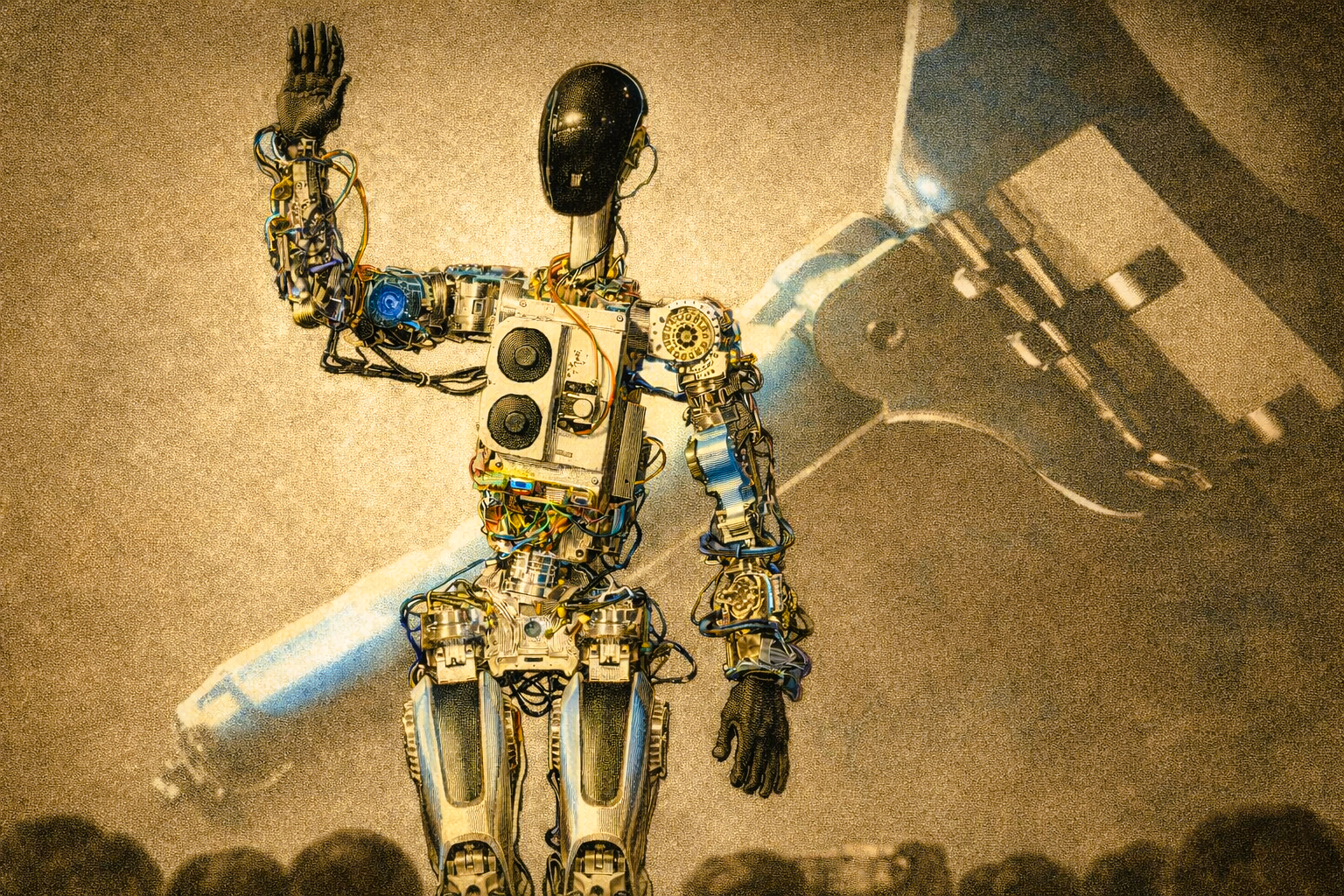
Why I'm Betting on Bodies, Not Just Brains
If you have been reading this blog for a bit now, you know we have been skeptical of the “AI Bubble.” Our skepticism, or at least my own, has mostly centered around the economic implementation lagging the hype. We spent the better part of 2025 watching companies buy massive amounts of GPU compute to build smarter chatbots, yet aggregate productivity statistics barely budged. (Yes, we have some data now that shows the effects of AI on productivity but not nearly as much as you would think).
While the market was distracted by the “Brain” trade (LLMs, data centers, and NVIDIA chips), you may have missed the momentum building in the “Body” trade.

Will the Fed’s Decision to Cut Interest Rates Solve the Unemployment Problem? Only if it Benefits Young Workers.
Headlines this past week have announced the Fed's recent interest rate cut. Interest rates have now been shifted from a range of 3.5 to 3.75 percent, and not without controversy.
The decision was made amid an economically confusing environment characterized by both high inflation and high unemployment. While most headlines highlight the potential impacts on mortgages, inflation, and overall employment, this article focuses on how lower interest rates could significantly increase employment among recent college graduates.

AI Has Been Adopted. So Why Is Productivity Still Hard to See?
Most large companies have formal policies, enterprise licenses, internal copilots, or approved tool stacks. In many sectors, AI is already embedded in day-to-day work. If adoption alone were the constraint, we should already see it in the productivity data.
And yet, the aggregate numbers remain underwhelming.
This tension is often framed as disappointment or hype fatigue. I think it is better understood as a timing and measurement problem. In this post, we will suggest a different, slightly more uncomfortable explanation to the fears of an AI bubble.

BRICS, the Dollar, and the Real Economics Behind the Global Power Shift
For context, I am currently staying in New Delhi. And during Putin’s recent visit to India, the city took on a charged, contemplative mood. Conversations among colleagues and clients kept circling back to a familiar question: Is the world finally tilting away from the United States and toward a BRICS bloc? Well, while Putin was in town, I attended a talk hosted by the Chintan Research Foundation that explored the state of India-Russia relations and the shifting dynamics inside a BRICS / Eurasian Economic Union grouping that continues to expand and evolve. The timing made the discussion feel especially immediate.
Sitting there, I understood why so many people ask whether the United States is losing its grip. I hear the fear frequently from colleagues and clients. They see BRICS expanding. They see the headlines about de-dollarization. They watch policymakers spar over sanctions, AI, and global rules. And they wonder whether the world is moving into a new era where the dollar stumbles and a coalition of emerging economies seizes the strategic high ground.
Toward a Responsible Vision of AI in Mental Health Tools: Interview with Daniela Andrade, Head of Growth at Resolution
With the pace of technological change, prevalence of job loss, and worsening socioeconomic inequality, individuals face more mental health challenges than ever. In conjunction with the AI boom, the market for AI in mental health is large and growing. On a global scale, it was estimated at $1.13 billion in 2023 and is projected to reach $5.08 billion by 2030.
Access to high-quality life advice or therapy matters now more than ever. Many entrepreneurs have spotted an opportunity: creating AI for mental health. Daniela Andrade is one such individual. Daniela graduated from Harvard in 2025 and is Head of Growth at Resolution, a startup that serves primarily young women by providing them with an “AI guardian angel” called Fabio to help them navigate toxic relationships.

How to Sell to a Customer Who Isn't Human
I’ve been in the holiday mood since right after Halloween. If you’re like me, holidays also mean thinking about the possibilities of the future. So, after watching Hocus Pocus and switching to Polar Express, I found myself doom-scrolling through economic forecasts.
The IMF’s latest World Economic Outlook paints a sober picture. Global growth is expected to slow to just 3.1% in 2026, with the outlook described as “dim prospects” amid persistent downside risks. In plain English: the economic pause many of us felt this year isn’t ending anytime soon.

If AI Is the Deal, the Surcharges Are the Catch. (Time to Read the Fine Print)
Michael Burry has a knack for walking into the party right when the music is loudest and asking where the fire exits are.
In 2005, that meant shorting the U.S. housing market while everyone else was busy securitizing granite countertops. Today, it means betting against the AI trade while the rest of us are delighting in auto-drafted emails and AI-polished pitch decks. On paper, he is “short AI.” In practice, his long game is quieter and more elemental: water rights, water-rich farmland, water utilities.
He is betting on scarcity against a story that pretends resources are infinite.
Could AI Master Economic Thinking to Solve Real-World Problems?
To many people, the economy represents a vast mystery of supply chains, tariffs, and uncertainty. To most professionals, making everyday business decisions regarding pricing, budgeting, or forecasting demand for a product appears an intractable problem. The study of economics attempts to put some structure on these moving pieces.
With the rise in economic uncertainty spurred by recent societal developments, such as AI, it’s worth asking whether AI itself can provide expert-level economic decision-making for individuals and organizations to sort through the noise.
The AI Paradox: Why Your New Colleague Is Only Coming for Your Entry-Level Job
Last week, I attended a gathering of economists and data scientists from major tech companies, all focused on how technology is reshaping business and work. Practitioners swapped insights on everything from labor market trends to AI experiments. The AI revolution promises to upend how we work and this is happening against the current backdrop of the “pause economy” with hiring and investment in a cautious lull. The discussions ranged from the cooling tech job market to cutting-edge methods in causal inference and AI measurement, and deeper questions about whether AI is a substitute for human work or a “bicycle for the mind.”
Monetary Policy for People Who Were Not Listening
Central bankers like to say that monetary policy works through expectations. A beautiful concept implying a public that is constantly calculating, analyzing, and adjusting to the Fed's subtle signals. But that sophisticated engine only runs, of course, if someone actually bothers to update those expectations. In a paper I have forthcoming in the Journal of Economic Analysis, I dig into this very question: Do U.S. households truly revise their core assumptions about inflation, interest rates, and housing when the Federal Reserve makes an announcement? The period I examined (2013 to 2021) was nearly a decade full of unconventional tools, "forward guidance," and agonizingly slow normalization. This was the perfect test bed to see how much of the Fed's careful communication truly reaches the public.
The short answer? It reaches them, but on very narrow terms.

Sorry to Burst the Bubble! Why AI’s Promise Won’t Deliver Without a New Economic Framework
It began with headlines.
“Amazon cuts 14,000 corporate jobs as spending on artificial intelligence accelerates.”
“Salesforce CEO: ‘I need less heads.’”
“Meta axes 600 roles amid AI expansion.”
Each announcement laced with brutal irony, revealing companies not in distress but actually flourishing through the very mechanisms that deemed their hires expendable. Fair is fair, though, right? Nothing illegal happened, and technically this is an expectation of the marketplace. So, one can only wish these families all the best… right?
Then came the tag: “AI and robots will replace all jobs,” making work essentially “optional, like growing your own vegetables.”

The Ghost of 1995: Why Powell's Bid for a "Soft Landing" Is Far Riskier Than Greenspan's
In our business, precision is power. We build predictive models for clients making some of their biggest fiscal decisions. A couple of months ago, one of our best performers, a model that had nailed inventory needs quarter after quarter, started to drift. Its forecasts weren’t wrong, exactly. Just… fuzzier. The prediction intervals widened. The signals got noisier.
When we investigated, the culprit wasn’t the math; it was the map. Our assumptions, built on decades of reliable data from America’s gold-standard statistical agencies, were suddenly out of sorts. Tariff tremors, policy-driven supply distortions, and even now a federal shutdown have all disrupted the data we depended on.