

Column

Who's Really Deciding Whether You Buy a House?
The article argues that historic low consumer sentiment and elevated mortgage rates have left prospective homebuyers without a clear macro signal, making the social context of the decision more important. Borrowing from B2B marketing, it frames homebuying as a “buying group” decision shaped by partners, parents, friends, recent buyers and cultural scripts about ownership. In a volatile economy, those voices grow louder and often reflect conditions that no longer match today’s housing market.
It urges buyers to evaluate each influence rather than suppress it: whether the advice fits their finances, local market and current rate environment, or merely repeats old assumptions about adulthood and stability. With the Fed likely holding rates and uncertainty continuing, the article concludes that clear decisions depend on hearing one’s own signal through the surrounding noise.
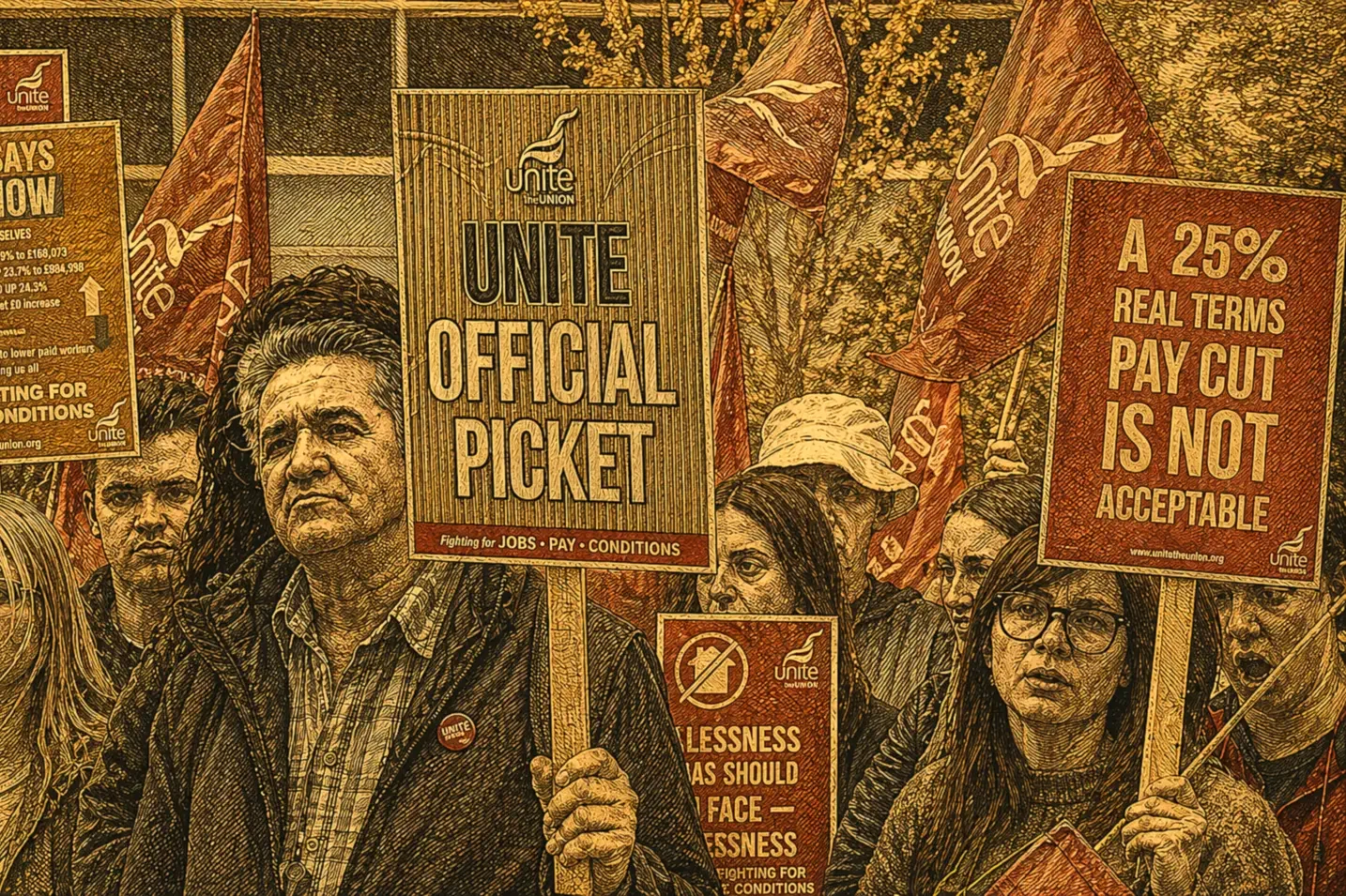
AI-Driven Power Dynamics: A New Era in the Long History of U.S. Labor Rights
The article argues that today’s difficult job search is not a temporary Gen Z shock but a structural shift in bargaining power toward employers as AI reduces labor demand. After the post-COVID tech hiring boom, overhiring unwound into layoffs and tighter openings. Long jobless spells and weak outside options make workers quieter at work. As automation substitutes for routine tasks, workers accept weaker pay and terms, cling to jobs out of fear and report burnout.
It situates this in a longer U.S. arc where labor protections expanded in the mid-20th century then eroded after the 1980s as unions weakened and capital gained leverage. AI is framed as an accelerant that can decouple growth and profits from job creation. The piece calls for policy responses including UBI, UBE and sovereign wealth dividends to restore baseline security and worker bargaining power.

A Growing Gender Divide in the AI Economy
The article argues that AI is reshaping gender inequality even before the pay gap visibly widens. Women are more concentrated in clerical and administrative roles where AI can restructure work, while men are more concentrated in technical, AI-complementary roles. Among college graduates, the exposure pattern flips, reflecting men’s STEM concentration. Since wage gaps lag task reorganization, exposure and position in the AI investment stack matter more than today’s averages.
It also flags an adoption gap. Surveys find men use generative AI at work more often than women, and few employers offer training. As AI-investing firms shift toward more educated, STEM and IT-heavy workforces and flatter hierarchies, rewards may flow to those closest to deployment. The piece argues leaders can still narrow the divide by widening tool access, funding training early and building ladders into AI-complementary roles.

Why 50 Million Homeowners Aren’t Moving
The article argues that 3% pandemic mortgages created a lock-in trap. With over half of loans below 4%, moving at roughly 6% rates raises payments sharply, so homeowners stay even when life changes. FHFA estimates each 1-point rate gap cuts selling odds by 18%, helping explain why existing home sales are at mid-1990s lows and inventory stays thin, keeping prices high and first-time buyers squeezed, while owners are paper rich but mobility poor.
It adds that bond-market volatility has pushed rates up again, widening the gap and delaying mobility. The market likely stays frozen until rates fall near 5%, which most forecasters do not expect in 2026 or 2027. Assumable or portable mortgages could reduce the moving penalty, but they complicate securitization, so adjustment will be slow, driven by new construction and forced life events.

Is Peer-to-Peer Investing a Smarter Bet on the Real Economy?
Peer-to-peer lending is resurfacing as stocks swing and housing stays unaffordable, pushing investors toward cash flows tied to household credit. In the U.S., this usually means buying notes backed by unsecured consumer loans, with no FDIC insurance and real default risk. The market has moved from hands-on “peer” picking to platform-led underwriting and automated allocation, funded increasingly by passive and institutional capital. Studies suggest platforms sometimes use information beyond FICO, and refinancing can improve borrower balance sheets in the short run.
But the article warns that innovation is not immunity. Early Prosper investors mispriced risk, and today’s fee-driven platforms still embed originate-to-distribute incentives and model risk. In stress, funding can vanish when investor trust breaks. Research links fintech loans to higher default rates and sensitivity to rate hikes. Treat P2P as a small, higher-risk credit sleeve, not a safe haven.
The Limitations of Means Tested Programs: Unemployment Benefits Won’t Solve Job Seekers' AI-Driven Labor Market Struggle
The article argues that rising inequality and longer jobless spells are exposing the limits of means-tested support. Unemployment Insurance reduces poverty, but weekly benefits rarely match living costs and coverage often ends before many searches do. Programs like the EITC require recent earnings, so households can fall through gaps once UI expires, even with other safety-net programs.
It argues that baseline security should be a rule, not an exception tied to narrow eligibility windows. The alternative is a three-part architecture with a UBI that avoids cliffs and time limits, UBE that offers a standing public job option and sovereign wealth dividends that return part of AI-linked tax gains. Firms can train graduates and hire more deliberately, but the core claim is that durable protection in an AI labor market requires policy.

The War Tax You're Already Paying
After U.S. and Israeli strikes on Iran, Iran’s closure of the Strait of Hormuz pushed crude above $100 and sent U.S. gasoline from $2.98 to $3.94 within three weeks. The article argues the immediate question is not geopolitics but incidence: a fuel shock functions like a regressive tax that bites hardest where gasoline is a large share of income.
Using estimates from Pantheon and Oxford Economics, it notes the bottom decile spends about 4% of income on gas versus 1.5% for the top, and a year at roughly $3.70 could add about $70B to household fuel outlays. Survey splits show sentiment holding up for equity holders while stagnating for everyone else, and state price gaps amplify the hit. The piece concludes the shock is already tightening budgets and complicating the Fed’s inflation trade-off.

India’s Frontier Bet Faces a Hard Constraint… Ownership
The article argues that India’s frontier-tech push has moved beyond slogans, but the real test is ownership. Convergence India showcased national programs across 6G, AI, quantum and supercomputing. Yet activity does not equal control over IP, standards, compute access and the commercial upside. India’s talent depth sits alongside low frontier patent capture, weaker private capital and recurring patterns where capability is built locally but rights settle abroad.
It frames 6G as a standards and SEP fight and warns that targets like “10% of 6G patents” only matter if they translate into licensing-relevant assets. The prescription is a more strategic fiscal state with protected multi-year funding, transparent compute allocation and procurement that creates reference buyers. It also calls for pushing funded outputs into global patent families, expanding industrial testbeds and prioritizing nearer-term semiconductor wins in OSAT, ATMP, photonics and design.

The Degree as a Weakening Signal: Companies Want AI-ready Grads, but Students Aren’t Prepared
The article argues that the signaling power of a college degree is weakening as AI reshapes hiring today. Employers want graduates who can ship fast, coordinate AI tools across workflows, and apply human judgment with customers. Degree titles matter less than proof through projects and outcomes, which creates a trap for new grads who need jobs to earn the experience that jobs now demand.
It reframes the college choice for students and families as a cost-benefit problem. College can still buy time, networks, and a portfolio, but tuition and debt make prestige a risky default when nondegree paths can offer stability. The piece argues firms must stop treating graduates as liabilities and build clear training pipelines to create "AI-ready" talent. Even that is incomplete without policy that protects living standards as the degree-to-job pipeline breaks.

When Your Best Customer Can’t Click
The article argues that AI-generated answers are collapsing the measurable web funnel by resolving decisions before a click occurs. It points to a steep drop in Google organic referrals to publishers from late 2024 to late 2025, while AI assistants account for only a trivial share of referral traffic, implying the demand did not “move” to new referrers but disappeared from observable analytics.
It frames this as an information asymmetry problem, not a tooling problem. Attribution has always overfunded what could be counted, but now the signal itself is vanishing as influence shifts inside model outputs that most firms do not track. The result is a measurement vacuum that markets will not fix on their own: brands cannot optimize what they cannot observe, and early movers who build proxies for AI visibility gain an advantage independent of product quality. The piece argues that third-party content now drives AI recommendations, yet most companies still fail to measure their presence in those answers.

Pack Your Schedule or Sharpen Your Positioning? Skills High School Students Can Develop in the Age of AI
The article argues that AI is shrinking the value of credentials, so students should avoid resume-stuffing and focus on durable signal. In a world of scarce attention, clear positioning often beats more APs. It highlights two skills. Students need to state how they create value with proof, and ask sharp questions that reveal where opportunities are forming.
For the first, students pick an area, learn the basics, ship a small project, and share their work in a consistent public narrative that cuts through AI noise. For the second, they talk to practitioners, track where startups are hiring, and reach founders before roles hit public job boards and AI filters. The piece urges a few focused hours each week that compound over time, while noting that schools and policymakers still bear responsibility for the wider labor market shock.
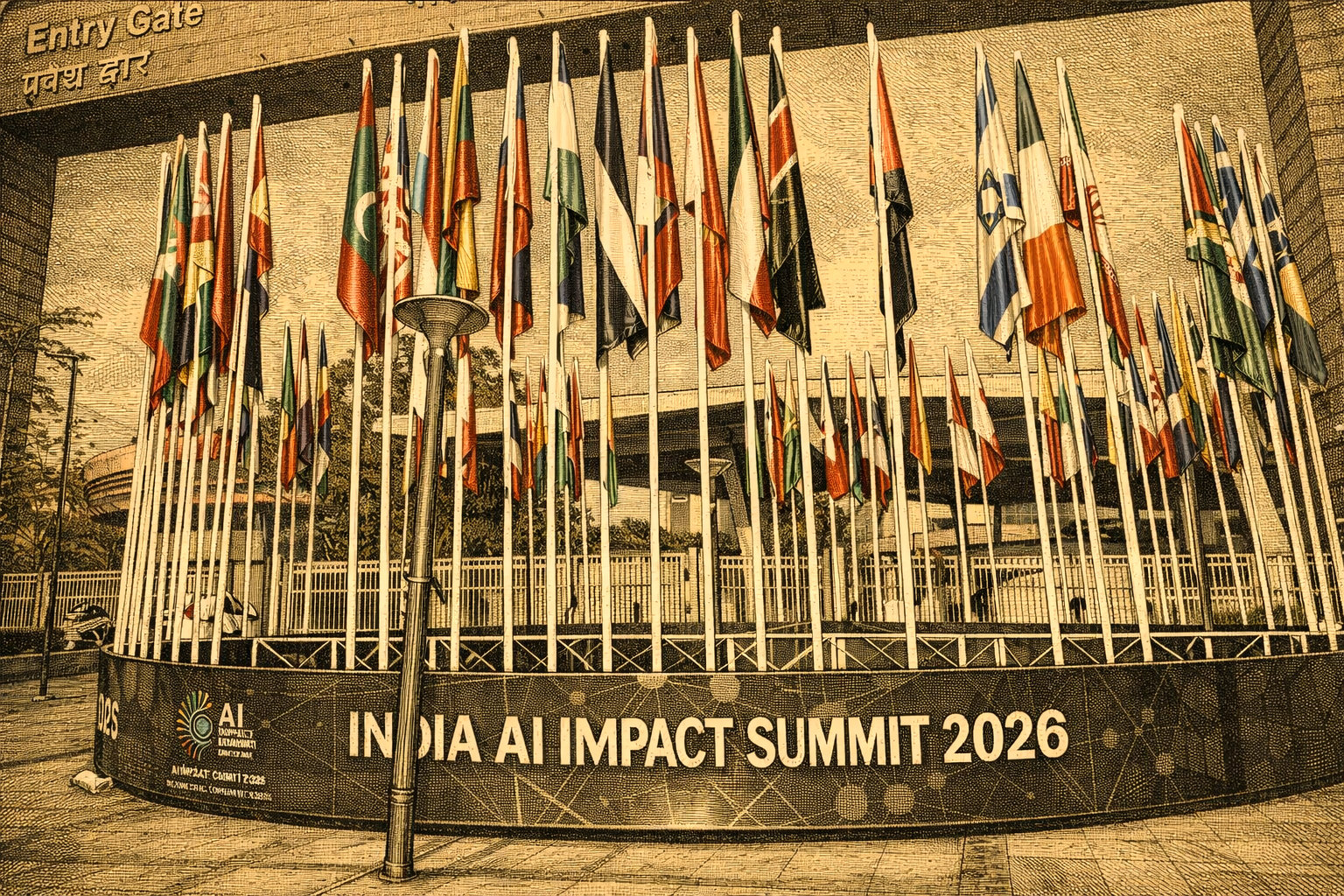
Can We “Win” the AI Race Together?
The article argues that the “AI arms race” framing is colliding with the economics of AI. Governments want scale and interoperability, but also sovereignty: control over data, compute, models, standards and talent. Since the full stack is too costly for most states, sovereignty becomes modular risk management, and energy constraints make compute a strategic bottleneck. Cloud regions still sit under jurisdiction, so access can become a bargaining chip.
Collaboration still pays where externalities cross borders: safety science, benchmarking, incident sharing and interoperable standards. This creates layered coexistence: open coordination at the bottom, control at the frontier. The U.S. pairs safety cooperation with export controls, the EU pools capacity via the AI Act and AI Factories, China enforces tight domestic rules and India bets on sovereignty-through-access and open ecosystems. The takeaway: treat access risk, energy and standards as first-order strategy variables.