

Column

The Great Labor Opt-Out
The article argues that the surge in “founder” and “creator” identities is less a cultural shift than a labor supply response to a deteriorating outside option. With hiring stuck well below pre-pandemic levels and job search feedback collapsing, the expected value of traditional job hunting has fallen. Workers who can exit do so, not because self-employment is superior, but because the probability of receiving a viable offer has declined.
It links LinkedIn trends to Census data showing business applications far above pre-pandemic norms, then reframes the surge using “high-propensity” measures: much of the growth looks like low-payroll, freelance, or gig registration rather than classic startup dynamism. This “Haltiwanger inversion” suggests business formation now partly captures labor market blockage. The article concludes that necessity-driven self-employment can reshape B2B demand and may not lift productivity, even if AI tools lower barriers for genuine entrepreneurs.

Trillionaires and Layoffs? An Approach to Redistribute Companies’ AI-Related Wealth
The article argues that AI is widening the gap between owners and workers: job searches are taking longer and wealth is concentrating among those closest to AI profits. It treats UBI as a partial safety net but warns that UBI alone can deepen power asymmetries between recipients and the policymakers who control the rules.
To reduce dependence on UBI, it proposes an Alaska Permanent Fund-style "AI dividend": governments pool part of the tax revenue already collected from AI-linked corporate profits and pay citizens equal annual shares. The goal is a stable, diversified fund that cannot be captured by any single company or elite. Open questions include what counts as an AI company and whether the program should be state or national. The author argues this shares AI gains without betting everything on UBI or reopening major tax fights.

Why the AI Explanation Took Over
The article argues that recent layoffs at profitable firms are being misread as AI-driven job replacement. The real drivers are post-pandemic demand normalization after the 2020–2022 hiring boom and the repricing of capital once rates jumped, which made boards and investors demand visible efficiency. Layoffs became a signal of discipline and margin protection, often paired with AI and data-center commitments.
AI matters mostly as framing and capital-allocation justification. Productivity gains are hard to measure, but headcount cuts show up immediately in revenue-per-employee, so executives cite AI to explain why labor costs must fall now. The cuts also reshuffle power by trimming recruiters, coordinators and middle managers while protecting core engineers and AI specialists, producing leaner, centralized firms. The article concludes this is rebalancing, not collapse, and urges leaders to base decisions on regime shifts and measurable signals, not headlines.

Apply More, Hear Less, Feel Worse
The article argues that weak consumer sentiment is increasingly a jobs story. Unemployment is still low, but hiring is down, applications per opening have surged, and many searches produce no callbacks. People update expectations from signals they can feel, so silence in the job hunt erodes confidence even when top-line labor data looks fine.
It describes a feedback loop: more applicants lead to heavier AI filtering and slower recruiter response, which pushes people to apply even more and feel less capable. That dynamic shows up in survey measures of confidence and helps explain why sentiment is slipping among professional, higher-income households. Mardoqueo concludes that policymakers and employers should track and improve feedback metrics such as hiring rates, response rates and time-to-hire, because these shape spending, saving and voting.

Universal Basic Income in an AI-Driven Age Part 2: Architecting a Fair Policy
The article argues that universal basic income should not be dismissed in an AI-driven economy, but that its value depends entirely on how it is designed. As automation erodes entry-level jobs and unemployment among graduates remains high, retraining alone is unlikely to solve labor displacement. In that context, a carefully implemented UBI could provide basic economic security, allowing individuals to weather job loss and pursue education or career transitions without immediate financial strain.
At the same time, the article warns that poorly designed UBI programs could reinforce power imbalances and limit mobility. Income thresholds risk creating “cliff effects” that discourage wage growth, while centralized control over eligibility and messaging may deepen class divisions. The author concludes that any serious UBI proposal must focus on incentives, governance, and framing to ensure it empowers recipients rather than entrenching dependence.
The Fed's Communication Channel is a Broken Functor
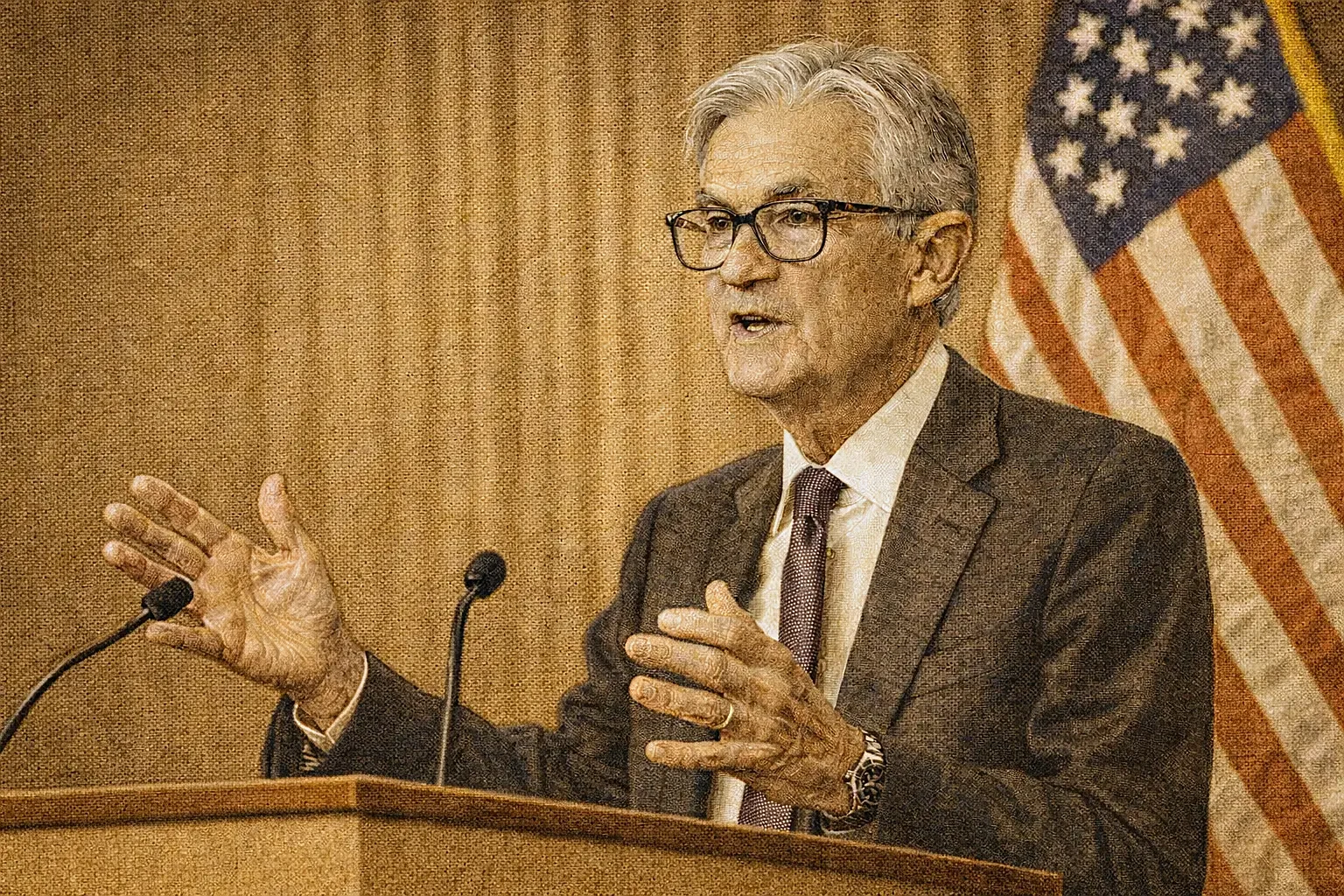
The article argues that the Federal Reserve’s biggest problem today is not inflation itself but the failure of its communication to reach ordinary households. While actual inflation has fallen to around 2.7%, many Americans still expect much higher inflation and feel pessimistic about the economy, leading them to behave as if inflation is still a crisis. Using an analogy from category theory, Mardoqueo explains that the Fed’s intended communication chain, from Fed announcements to financial markets to household expectations, no longer works for most people because households pay more attention to everyday prices like groceries than to markets or Fed statements. As a result, inflation expectations remain unanchored, weakening the Fed’s credibility at a sensitive political moment. Until the Fed finds a way to fix or adapt to this broken communication channel, the gap between economic reality and public perception is likely to persist.

Exploring Universal Basic Income in an AI-Driven Age: Economic Security or Power Dynamics?
It's 2026, and as new AI tools seem to emerge every week while unemployment ticks up, some may ask: are we headed toward a Universal Basic Income scheme?
As more and more tasks become automated, from data analytics to summarizing reports and beyond, almost every person I've spoken to lives with a lingering fear that AI could replace their job. Without a job, a person must find an alternative way to pay their living expenses.
Enter the idea of Universal Basic Income (UBI). Under a UBI arrangement, each individual receives a minimum fixed payment, supposedly allowing them to live without earning an income from a job.

Stop Doomscrolling, and Start Stress-Testing: How Geopolitics Hits the Economy and Your Wallet
On Saturday, my phone didn’t just buzz… it practically tried to achieve orbit!
I had actually managed to fall asleep like a responsible adult who swears they’re “cutting back on news,” and then woke up to an avalanche of alerts about a major geopolitical rupture in Venezuela. You know, the kind of headlines that makes you blink twice and think, “oh, geeze… not again! Not another one!” Somewhere in my brain, the Chris Farley meme was already putting on its awful, brown tie and reporting for duty: “Getting pretty tired of living through historical events.”
That joke may be doing an irresponsible amount of emotional labor right now. And for that, I apologize.
Why I'm Betting on Bodies, Not Just Brains
If you have been reading this blog for a bit now, you know we have been skeptical of the “AI Bubble.” Our skepticism, or at least my own, has mostly centered around the economic implementation lagging the hype. We spent the better part of 2025 watching companies buy massive amounts of GPU compute to build smarter chatbots, yet aggregate productivity statistics barely budged. (Yes, we have some data now that shows the effects of AI on productivity but not nearly as much as you would think).
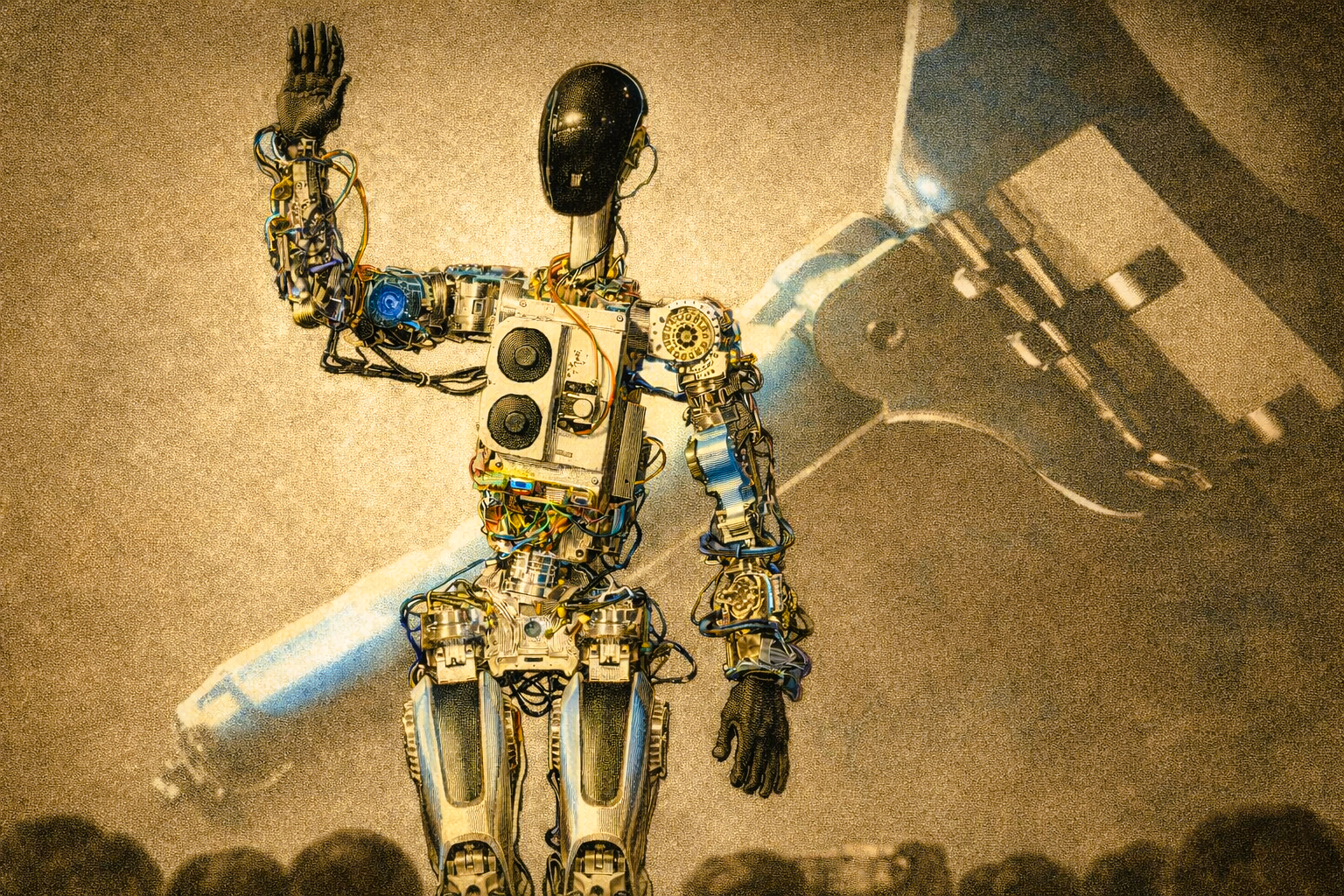
While the market was distracted by the “Brain” trade (LLMs, data centers, and NVIDIA chips), you may have missed the momentum building in the “Body” trade.

Will the Fed’s Decision to Cut Interest Rates Solve the Unemployment Problem? Only if it Benefits Young Workers.
Headlines this past week have announced the Fed's recent interest rate cut. Interest rates have now been shifted from a range of 3.5 to 3.75 percent, and not without controversy.
The decision was made amid an economically confusing environment characterized by both high inflation and high unemployment. While most headlines highlight the potential impacts on mortgages, inflation, and overall employment, this article focuses on how lower interest rates could significantly increase employment among recent college graduates.

AI Has Been Adopted. So Why Is Productivity Still Hard to See?
Most large companies have formal policies, enterprise licenses, internal copilots, or approved tool stacks. In many sectors, AI is already embedded in day-to-day work. If adoption alone were the constraint, we should already see it in the productivity data.
And yet, the aggregate numbers remain underwhelming.
This tension is often framed as disappointment or hype fatigue. I think it is better understood as a timing and measurement problem. In this post, we will suggest a different, slightly more uncomfortable explanation to the fears of an AI bubble.

BRICS, the Dollar, and the Real Economics Behind the Global Power Shift
For context, I am currently staying in New Delhi. And during Putin’s recent visit to India, the city took on a charged, contemplative mood. Conversations among colleagues and clients kept circling back to a familiar question: Is the world finally tilting away from the United States and toward a BRICS bloc? Well, while Putin was in town, I attended a talk hosted by the Chintan Research Foundation that explored the state of India-Russia relations and the shifting dynamics inside a BRICS / Eurasian Economic Union grouping that continues to expand and evolve. The timing made the discussion feel especially immediate.
Sitting there, I understood why so many people ask whether the United States is losing its grip. I hear the fear frequently from colleagues and clients. They see BRICS expanding. They see the headlines about de-dollarization. They watch policymakers spar over sanctions, AI, and global rules. And they wonder whether the world is moving into a new era where the dollar stumbles and a coalition of emerging economies seizes the strategic high ground.